Growing Paphiopedilum bellatulum orchid in the UK
Paphiopedilum bellatulum or the egg-in-a-nest orchid with the Latin etymology appropriately coming from ‘bellus’ meaning beautiful, grows in Myanmar, Yunnan province in China and nearby areas of Thailand. It entered cultivation initially as a result of the British Raj (well indirectly!). During the 2nd Burmese war, the British founded Fort Stedman on the shores of lake Inle in modern day Myanmar and its later commander, a Mr Moore, was responsible for collecting the first specimen plants and shipping them back home to the nursery of Messrs Low & Co in England. Described in 1888 as a Cypripedium it was reclassified in 1892 as a Paphiopedilum.
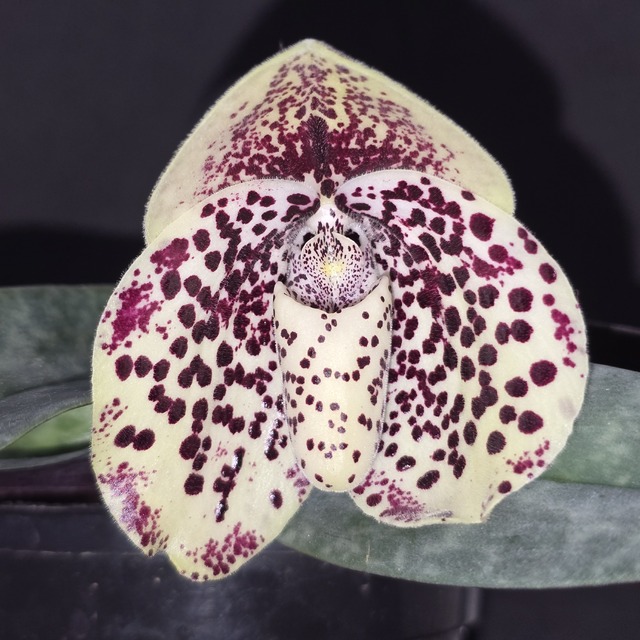
It's often described as a lithophyte (plant growing on rock) or as ‘semi-terrestrial’. The former isn't really true and neither really is the latter. It grows on the ground so qualifies as terrestrial, but is usually found in limestone cracks that become filled with loose organic material like leaf litter and moss. I grow mine in a fairly usual (epiphytic) orchid mix of mixed sized bark. This (as with epis) allows some moisture to be held, but also slowly dry out. In nature it's found under trees so lower light conditions and near rivers suggesting at least it likes high humidity. I grow mine on a West facing windowsill which keeps light levels down, but it's not an especially humid part of my house although it is surrounded by other plants which may give a higher humidity in a very localised way. I did previously add some limestone to the mix but it started washing out of the bark and I’ve not replaced it. Lack of it doesn’t appear to have made much difference. One thing this plant really doesn't like, is being repotted. Mine sulked for about 3 years after a repot before returning to a yearly flowering schedule. One growth I’ve removed sometime later, is clinging to life but really not looking very healthy. As a result its now crowding its pot but this seems to be how its happiest. Overall this has proven an easy plant to grow in UK household conditions (as long as not messed with) I water pretty much weekly with light fertilisation included and only change a little in the summer months to be slightly more frequent.