Neolithic landscape of Dorset again, a holy well, a grotesque or three and a man with a giant....
One of those blogs that’s probably more personal than purely historic, so please excuse me if you're looking for pure history. In my earlier blog Neolithic landscape of Dorset which was also a little bit 'what I did on my holidays', I looked at some small Neolithic sites starting with Long Bredy bank barrow. Now shown below in considerably better weather than back in April.
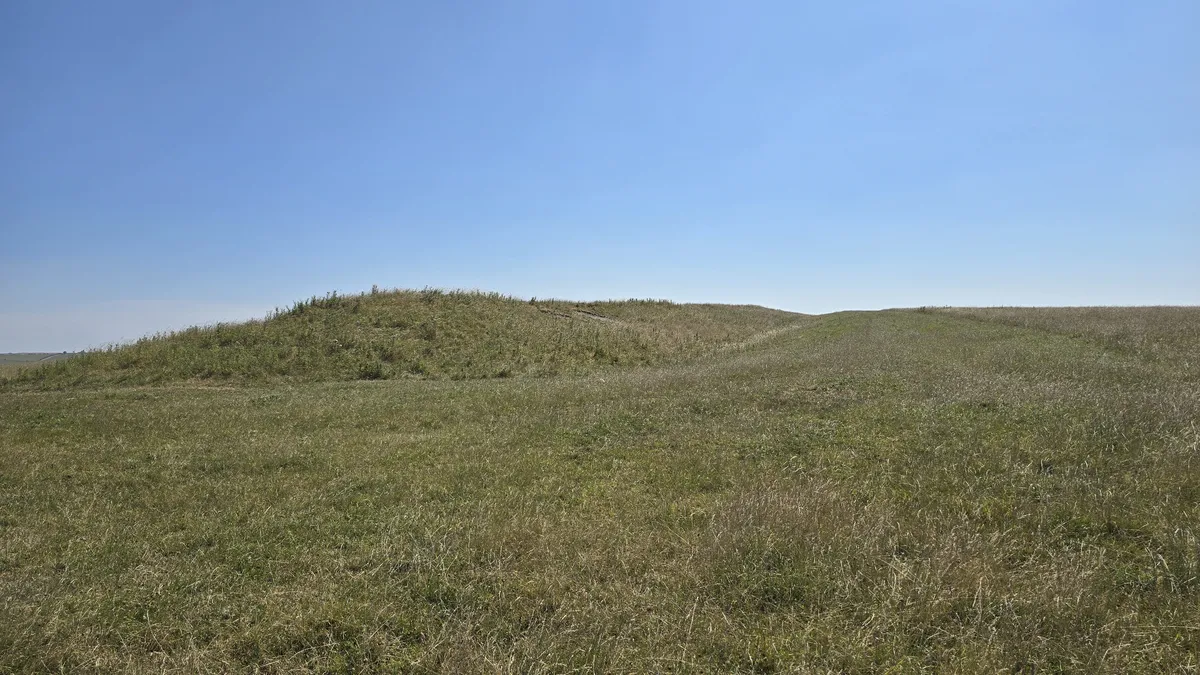
This site was well worth a visit again as its actually far more imposing than it looks in the photo, a large bank with a ditch (on the right side of that photo) that is very well defined when standing in it. The trouble with dry grass against dry grass is its hard to distinguish features from my photo camera photos, shown below are actually two round barrows (described on the OS map as tumulus)
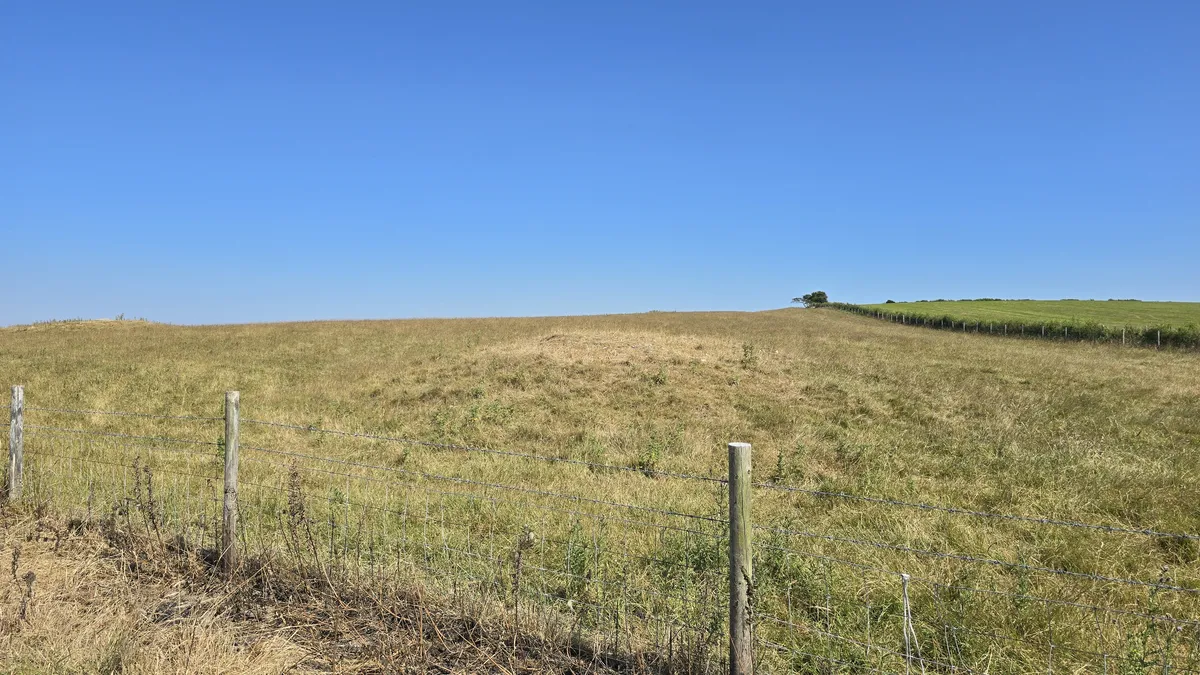 One mound on the left of the photo and one basically between the fence posts. Not hugely visible... but look at that sky!
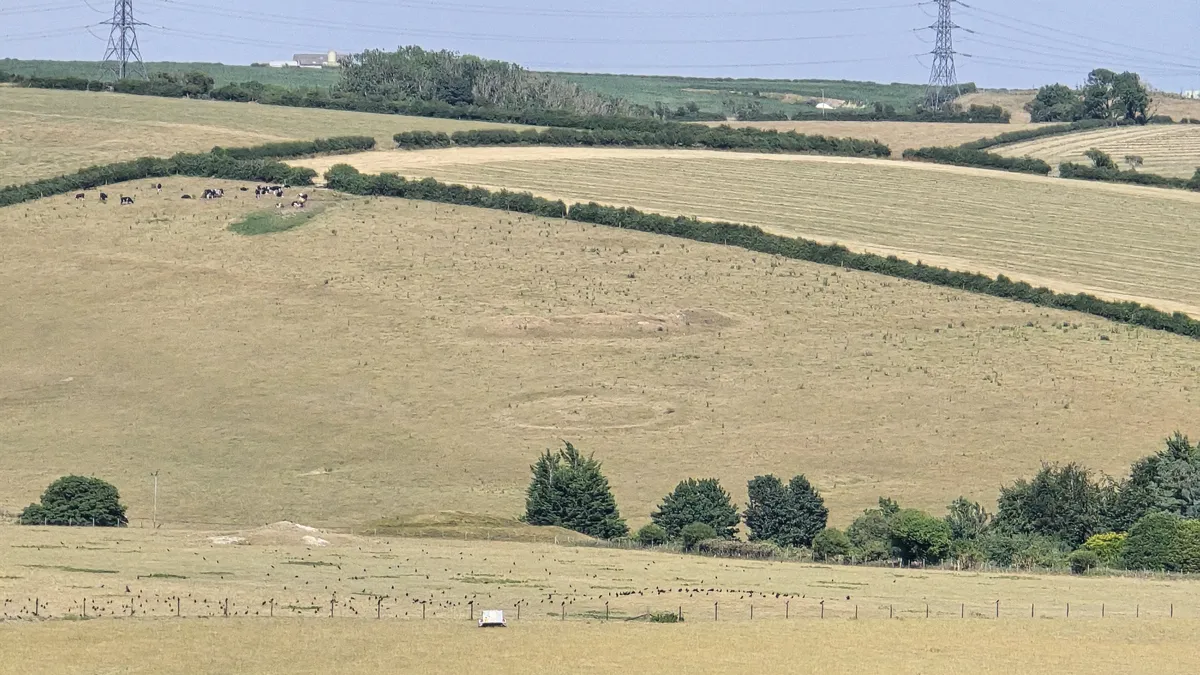
Looking at the OS map for the area there are lots of things marked as 'tumulus' (round barrows) or bank barrows but there are plenty of other visible features that are not on the OS map and not on Megalithic or if they are, are part of the wider whole rather than separate entries. This landscape is so rich in neolithic features and just like last time, asks far more questions than it answers; e.g what are these circular features up on a bank?
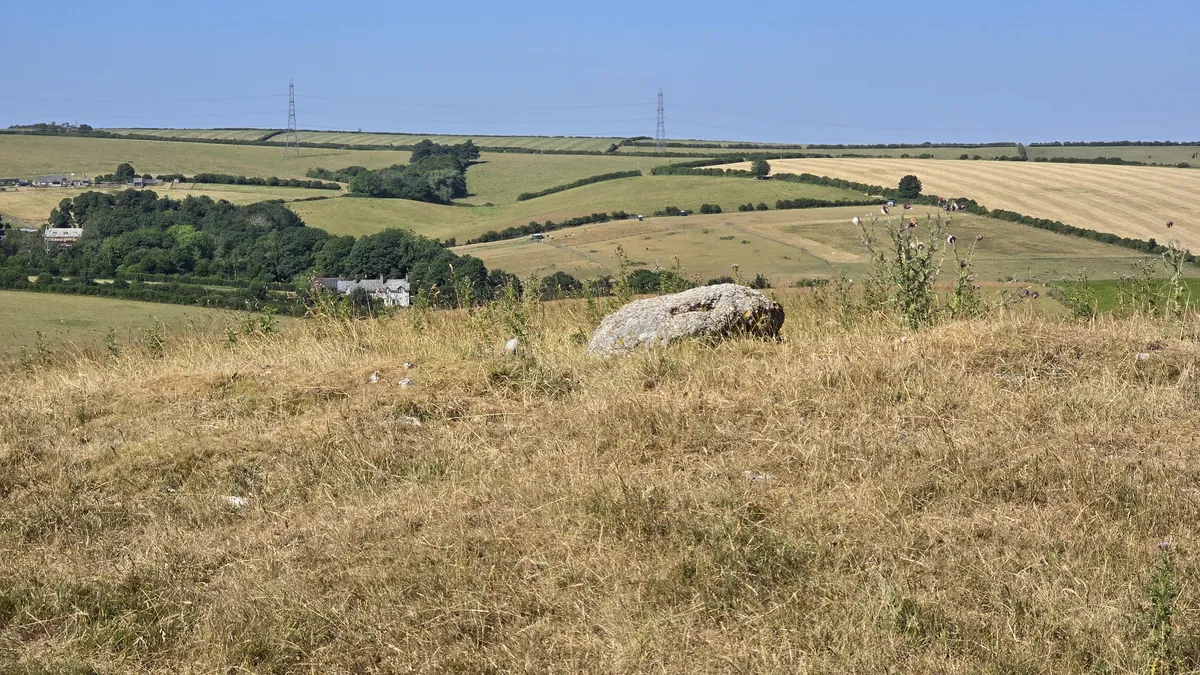
Labelled on Mega as 'Kingston Russell 3' there stands, well lies/slumps a single stone on top of a collapsed barrow close to the other barrows above.
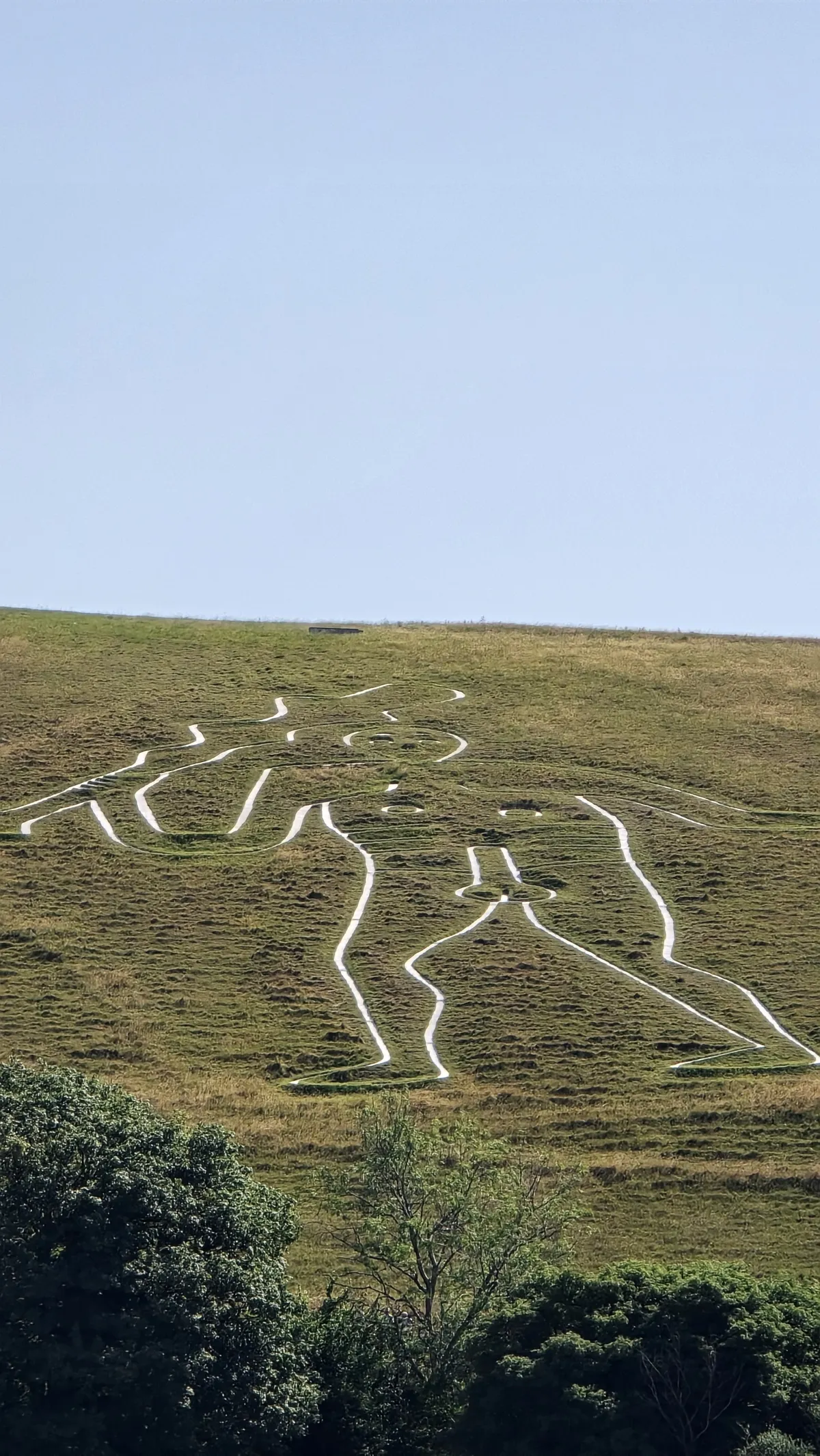
So that was a nice visit back to the Neolithic of Dorset, but I had time on my hands a day later so dragged Mrs Yunzi out. First up - as promised (and to Mrs Yunzi) a man with a giant ... I doubt the Cerne Abbas giant needs a lot of introduction to anyone in the UK, but for others this giant is carved into the chalky soil. It may be ancient, contemporary with the Iron aged earthworks just above his hand or he may have been carved in the 1600's by chaps who thought it was funny. Either way, its quite a sight and worth a quick stop if you're in the area.
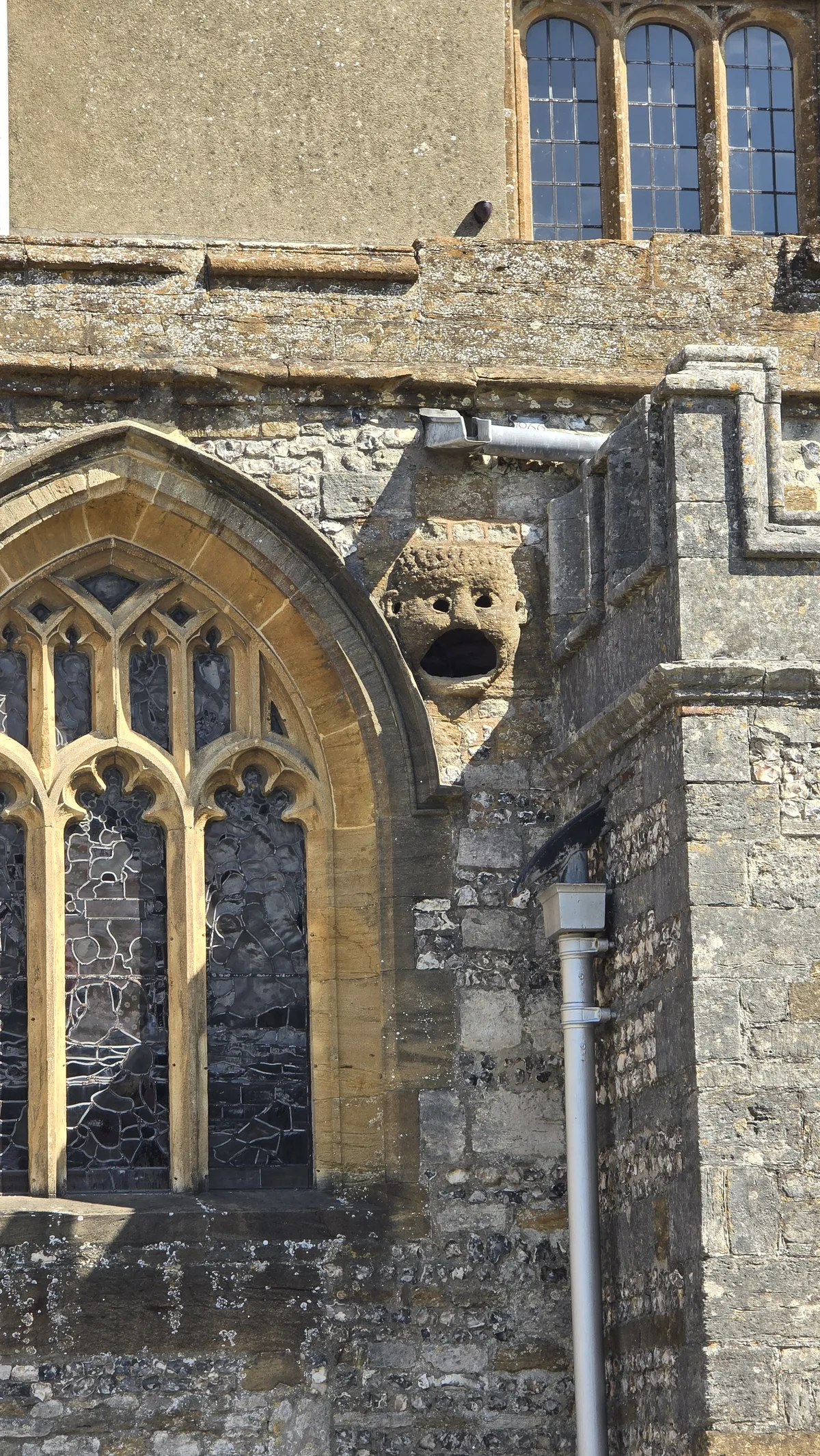
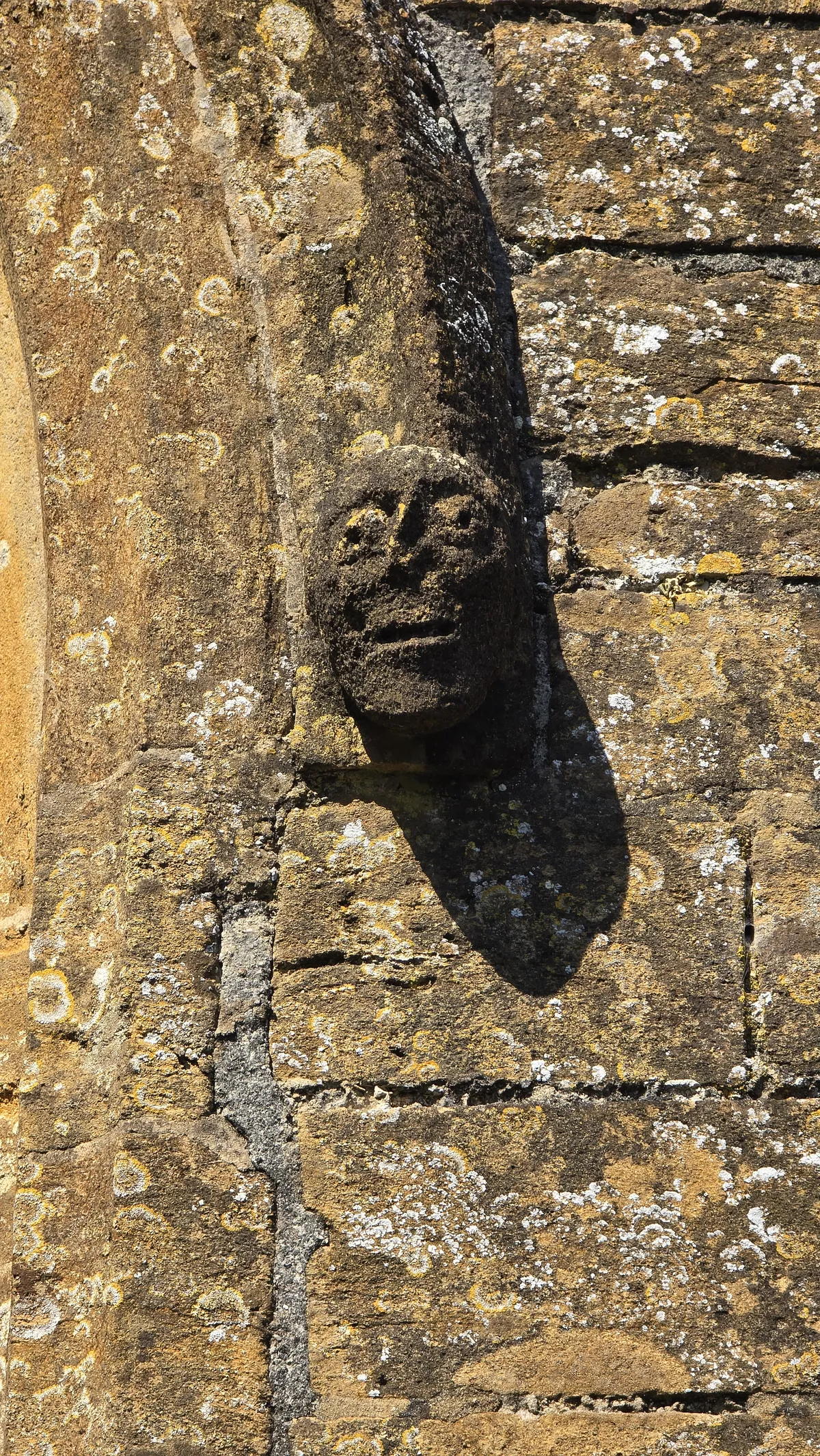
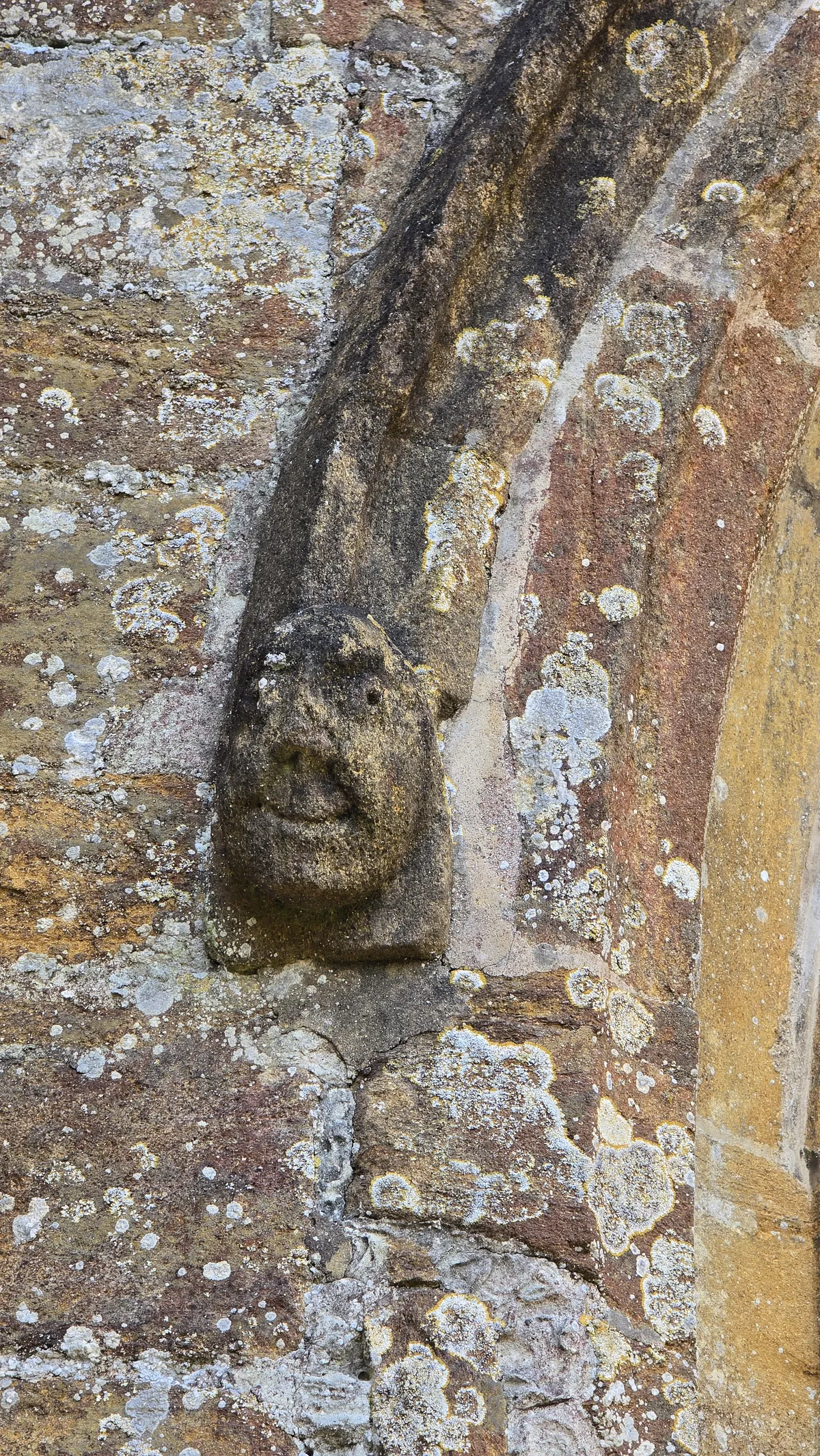
Moving swiftly away from the man with a giant club (and some sort of stick in his hand) we visited the very lovely village of Cerne Abbas itself. The village church of St Marys was very nice in the summer sunshine and has quite a lot of information inside about the history of the village, the church and the giant. There was a playgroup inside however, so we didn’t linger. The outside of the church has some charms of its own - 3 quite distinct grotesques.
The final stop of this little trip and indeed blog was the holy well associated with the nearby Abbey (closed to the public). St Augustines well in Cerne Abbas was likely first noted in around 987 when a Benedictine monk from the Abbey was worked to the point of exhaustion. In his dreams he then dreamed that St Augustine told him to bathe 3 times in the water as he recited the 50th Psalm (a proper blood and thunder one). The holy brother was then cured.
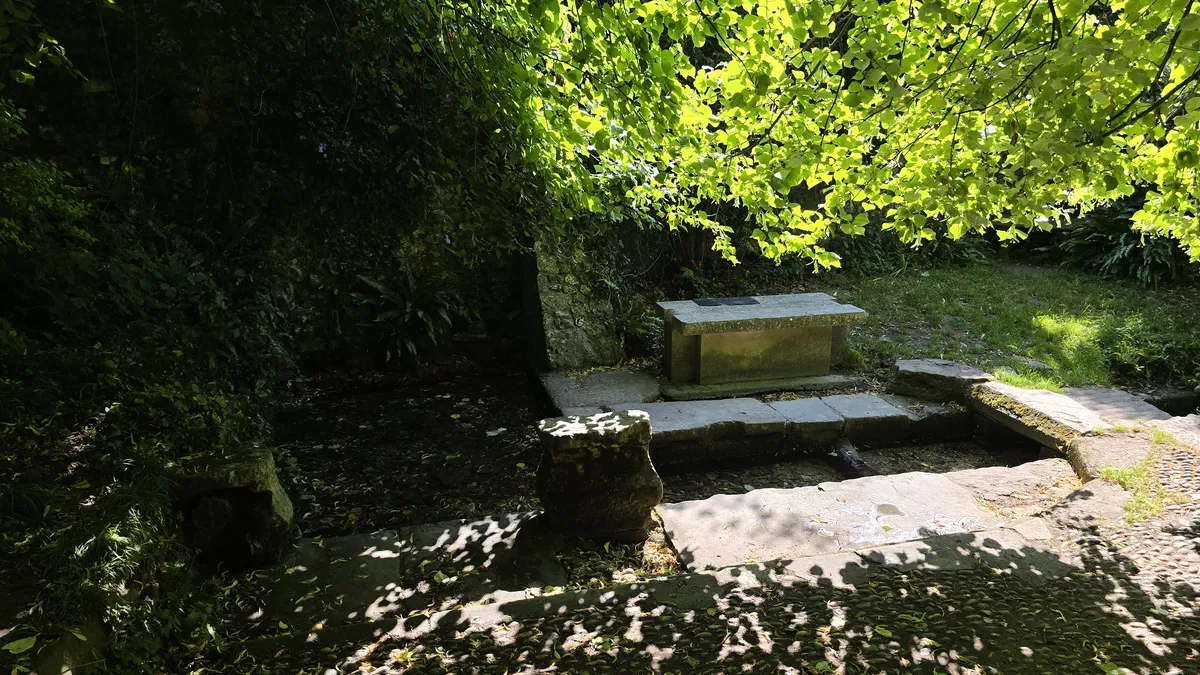 St Augustine's well - Cerne Abbas
The story itself comes from a Belgian monk called Goscelin who came to England and stayed in Cerne in 1070. It's then that the Cerne monks told him numerous tales of St Augustine. Later when commissioned by the church to write of the life of that saint, he included the story. He also mentioned that the well had sprung up when the first Archbishop of England struck the ground with his staff. So very similar to aspects of St Kenelm in my previous blog
The stories of Goscelin are repeated over the years in other books like New English Legendary (1300's) and by the end of the middle ages the well had a full shrine built over it. The water is now said to cure sore eyes and weakly children and visitors may have been advised to drink from a curled laurel leaf. I do wonder when the nearby graveyard was begun and what path the water takes... lets just say I wasn’t tempted! That aside, the modern well is exceptionally beautiful, calm and shaded by trees there are Clootie rags tied up, a small pool and some other modern features. Well worth the short walk to see if you've stopped to see the giant.
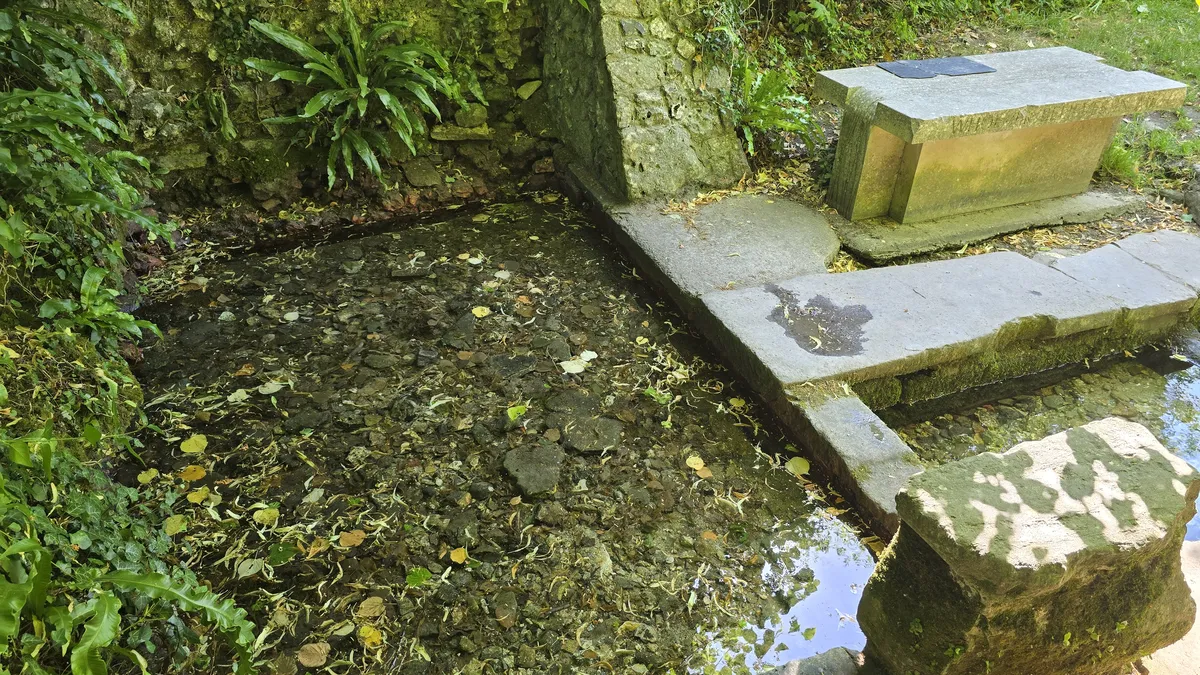 The small pool of the modern well
So despite my plans for this visit to Dorset not in any way coming to fruition, I was able to (re)visit some small history of England as well as see whatever its age a massive piece of landscape graffiti with a giant cock. As my historical outings go, this one was pretty good.