Neolithic Orkney (Part 1 - Chambers that are not Maeshowe)
Neolithic Orkney (Part 1 - Chambers that are not Maeshowe)
I'll get to Maeshowe in a later blog and following from my moan about Scottish tourism, I was able to visit. The moan stands (there were two unused places on my trip) but the site is remarkably and I'll discuss my visit when I have time to write it up.
Someone will have to fact check me, but it feels like mainland Orkney (which is the largest island, not the actual British mainland) must have more Neolithic ruins per metre than anywhere else in the British Isles, and unlike the modern landscape further south, here it really feels like you can see why our ancient ancestors chose these spots, even if their reasons for doing so remain opaque. There are stones here too, huge solo standing stones as well as stone circles. Also neolithic villages showing a life and housing beyond the more ceremonial buildings.
The 3 chambered cairns I'm going to show, 2 are on the side of hills, overlooking the sea or sea lochs. Windswept, barren and oddly beautiful. The other (Unstan) is lower, closer to Maeshowe, but still in sight of the banks of the Stenness Loch.
Inside each, the bones of generations would have been laid out inside the main chamber or in one of the side 'cells'. The entrance passage is small and would (still does in 2 cases) require crawling on your knees to enter.
My favourite of the 3, was Cuween chambered cairn, set high up on a hill overlooking the sea and landscape below it felt somehow the most authentic. I've mentioned before how the mind can't help but dwell on why 5000 years ago people built these sites. Generally considered to be for burial of their dead and intering of their bones, there feels like there is more to it. The presence of the dead, like in a Cathedral, a sign of veneration, but not the primary purpose.
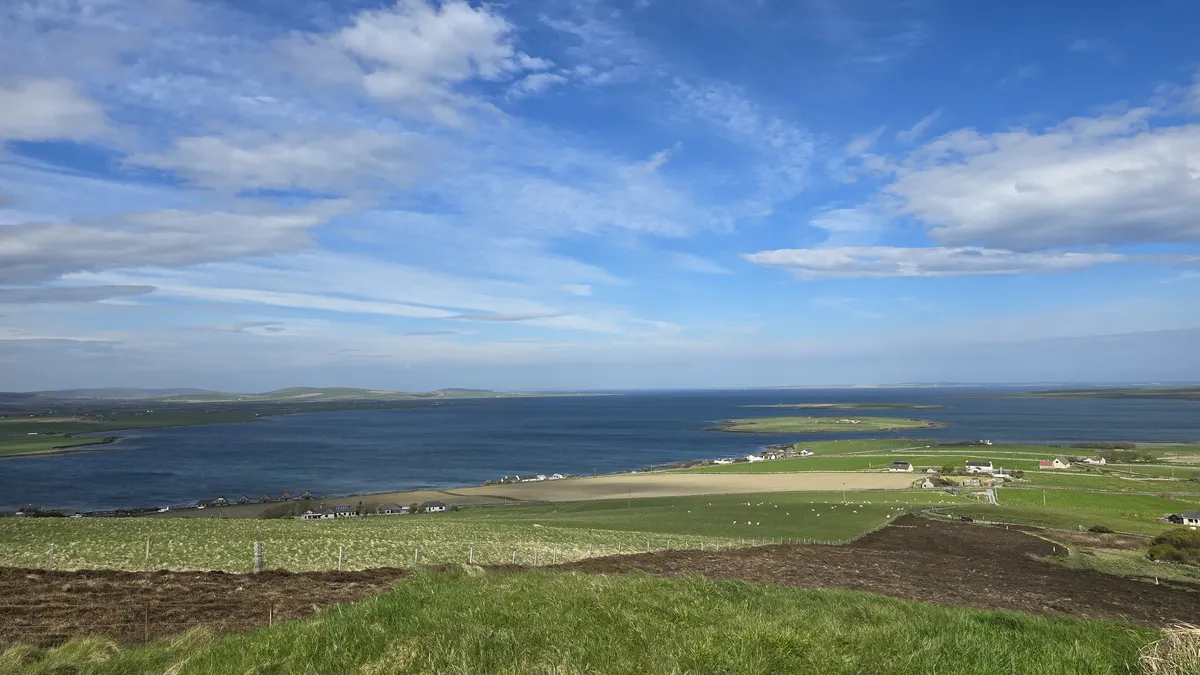 The View from Cuween chambered cairn
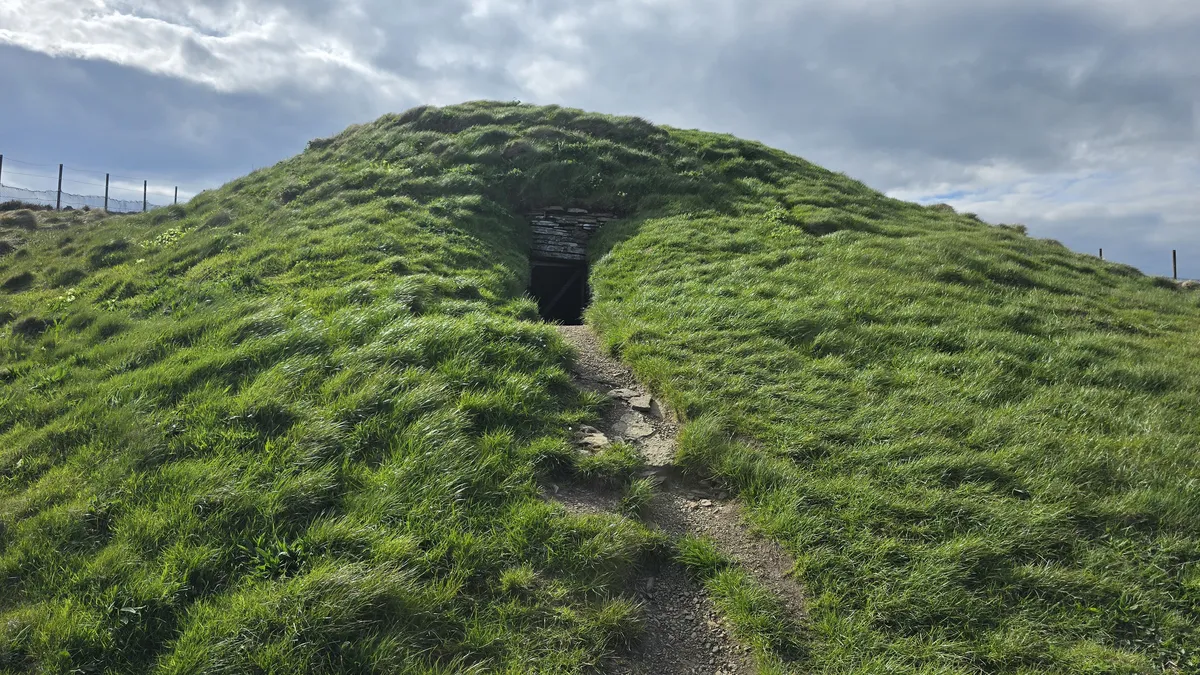 The cairn itself
Happily I had a torch in the car, so felt less concerned crawling on my hands and knees down the entrance way passage to get inside. Even allowing for the fact that at 6'5 (196cm) and a decently sized chap, I'm larger than the builders would have been, its a tight fit, suggesting entrance was only as needed rather than something regular.
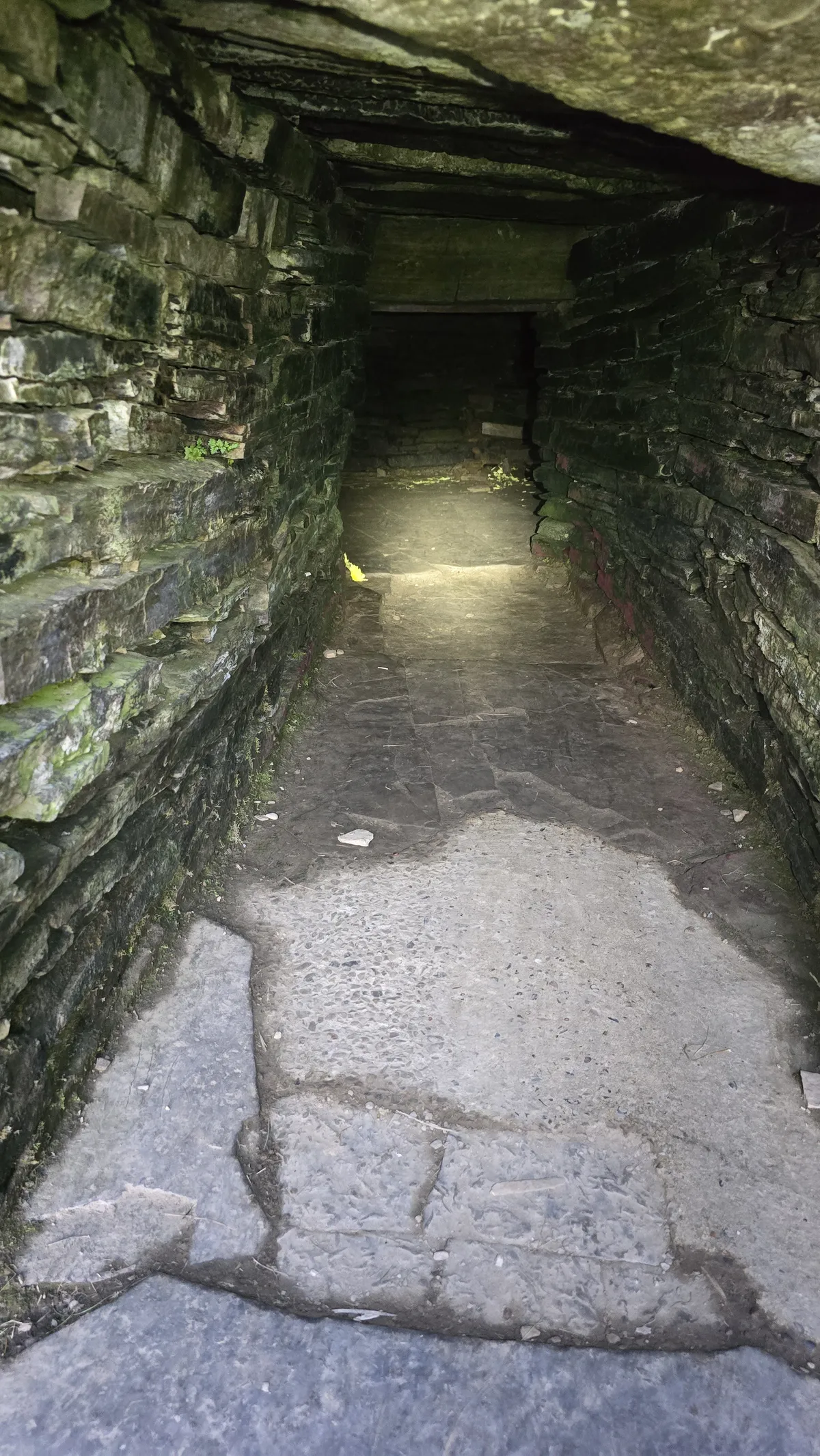 The entrance passage to the chambered cairn
Once inside, you see the entrances to the side cells (alas all too small for me). Offerings (and sadly some damage) suggests neopagans still hold some value here.
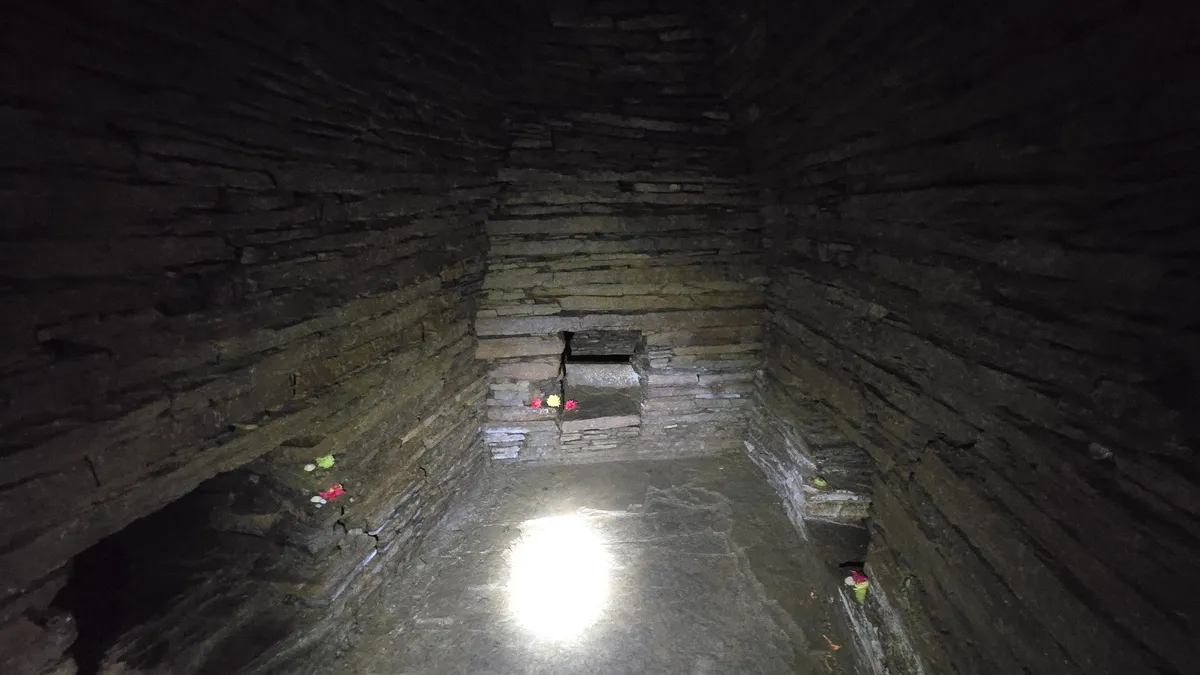 Inside the chambered cairn
Inside here, previous excavations had found not only human remains but also large quantities of dog bones suggesting that veneration of the dead extended to their companion animals as well. The ceiling is still stone slabs (replaced) although one cell still has the original structure, clearly showing (well maybe not in my picture) how stones were built up to support wider roofing slabs.
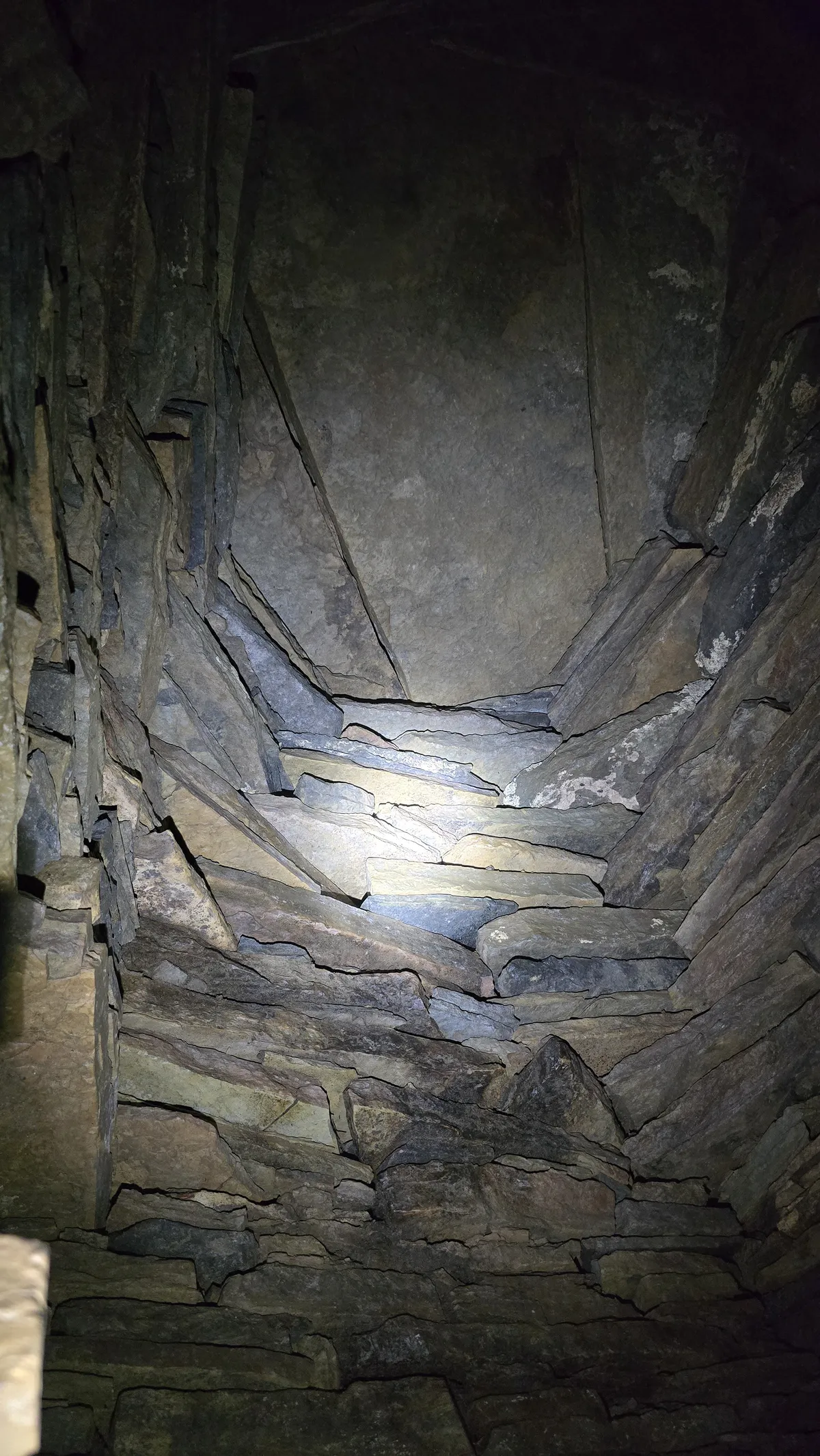 The roof of one of the chambers side cells, thought to be original
I spent sometime here, both inside and out. It was peaceful and atmospheric, higher up the hill there are a number of modern cairns which actually add significantly to the spirit of the place.
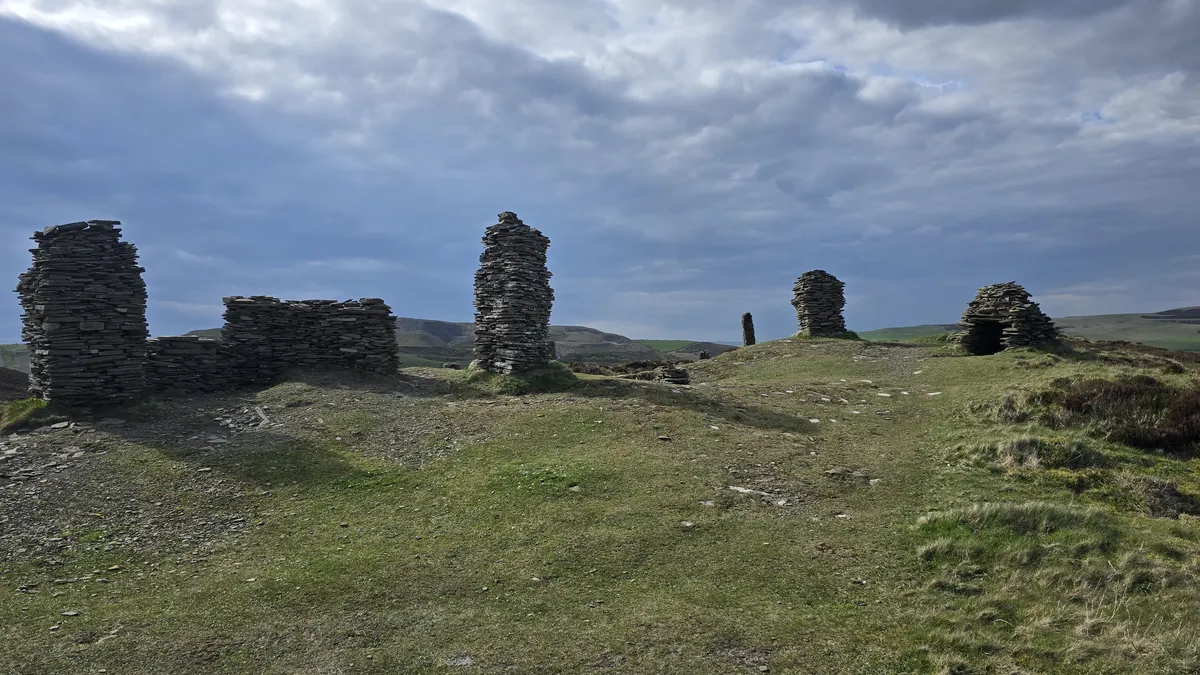 Modern cairns on top of the hill
Not all that far away is Wideford Hill cairn, which in many ways is similar. Also high on a hill and overlocking a sea loch and the landscape its probably even more isolated, requiring a longer walk across the peaty and bracken dotted landscape. The entrance passage here is present but gated and locked. It appears to be even smaller than at Cuween so perhaps non of us would fit. To get in, you open a modern hatch at the top and climb down a ladder. On my own, in the evening and what felt like miles from anywhere, this gave me more pause than even the entrance to Cuween!
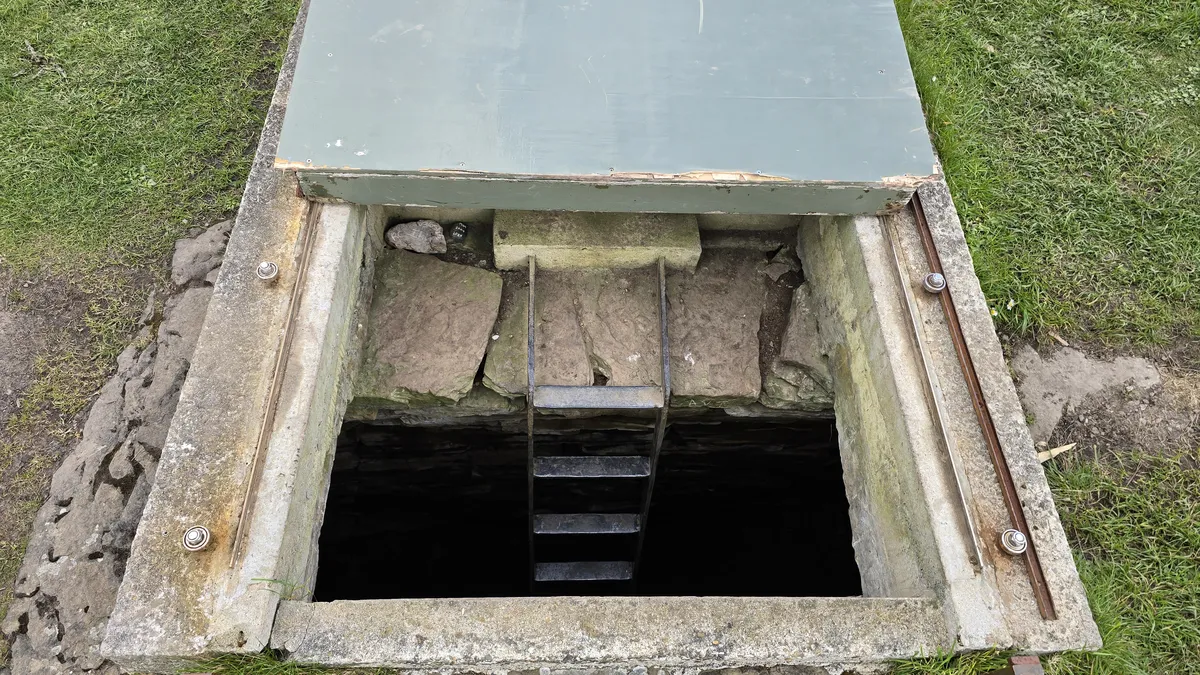 The entrance hatch to Wideford chambered cairn
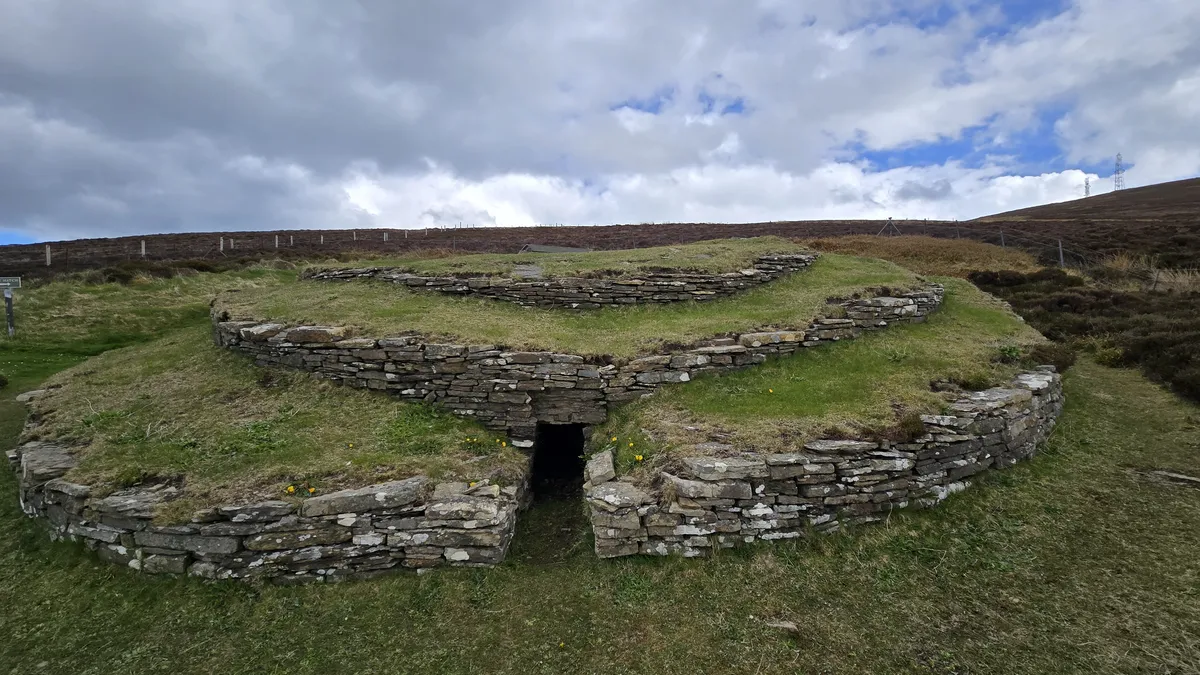 Wideford Chambered cairn
The notes on the display here, state that no human remains were found during the excavations, or pottery or tools. Which makes me pause again and consider what they really built these for. Its possible at some point the nearly 5000 years they've stood, it had been emptied however.
Neolithic people who presumably built these sites did live nearby. Remains of villages have been found further down the hill and close by as part of Orkneys wider neolithic landscape.
As you climb down the ladder, you're inside the main chamber and can kneel down to look through into the smaller side cells but its a smaller, tighter space than Cuween.
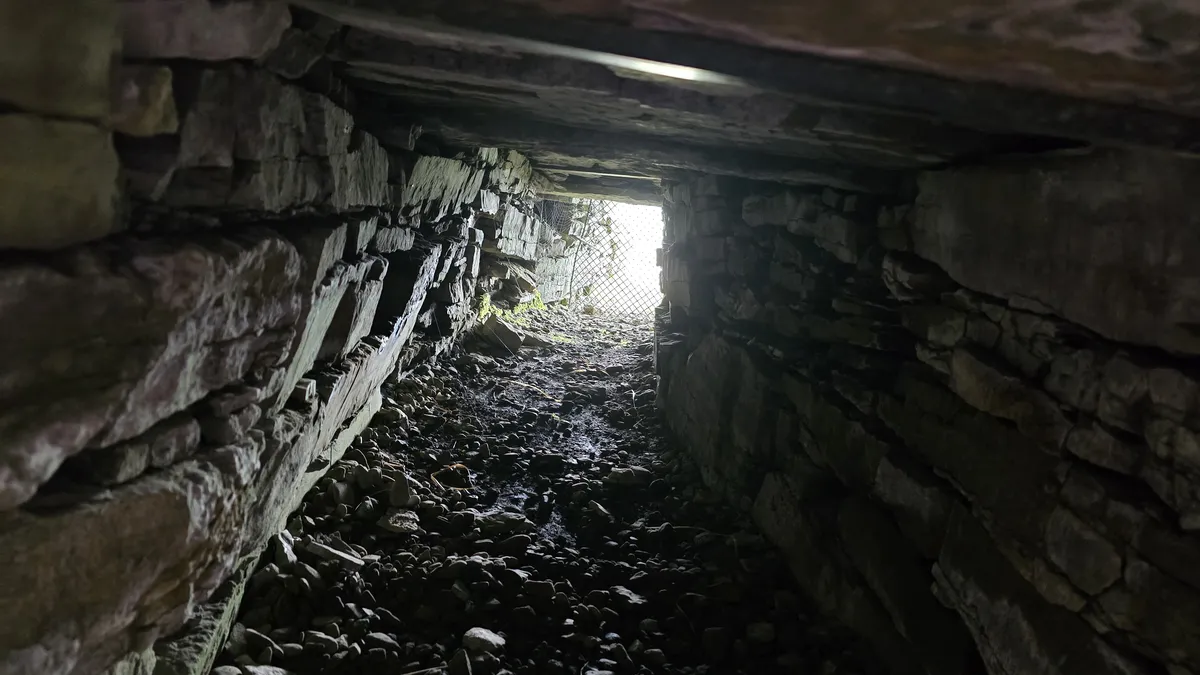 Looking out through the entrance passageway
I spent less time here, it was a longer, steeper walk back to my car and food was calling to me. A remarkable site nonetheless, that perhaps asks more questions than its 'sister' site at Cuween. Had it been stripped and emptied as suggested by Scottish History, leaving no sign of its use for death rites or had it simply been used for something else?
The final site in this blog, is yet another chambered tomb, but unlike the other two, is far more obviously restored with a totally modern roof with skylight. Its also lighter, airier and whilst the entrance passage isn’t by any stretch large, its passible for modern humans.
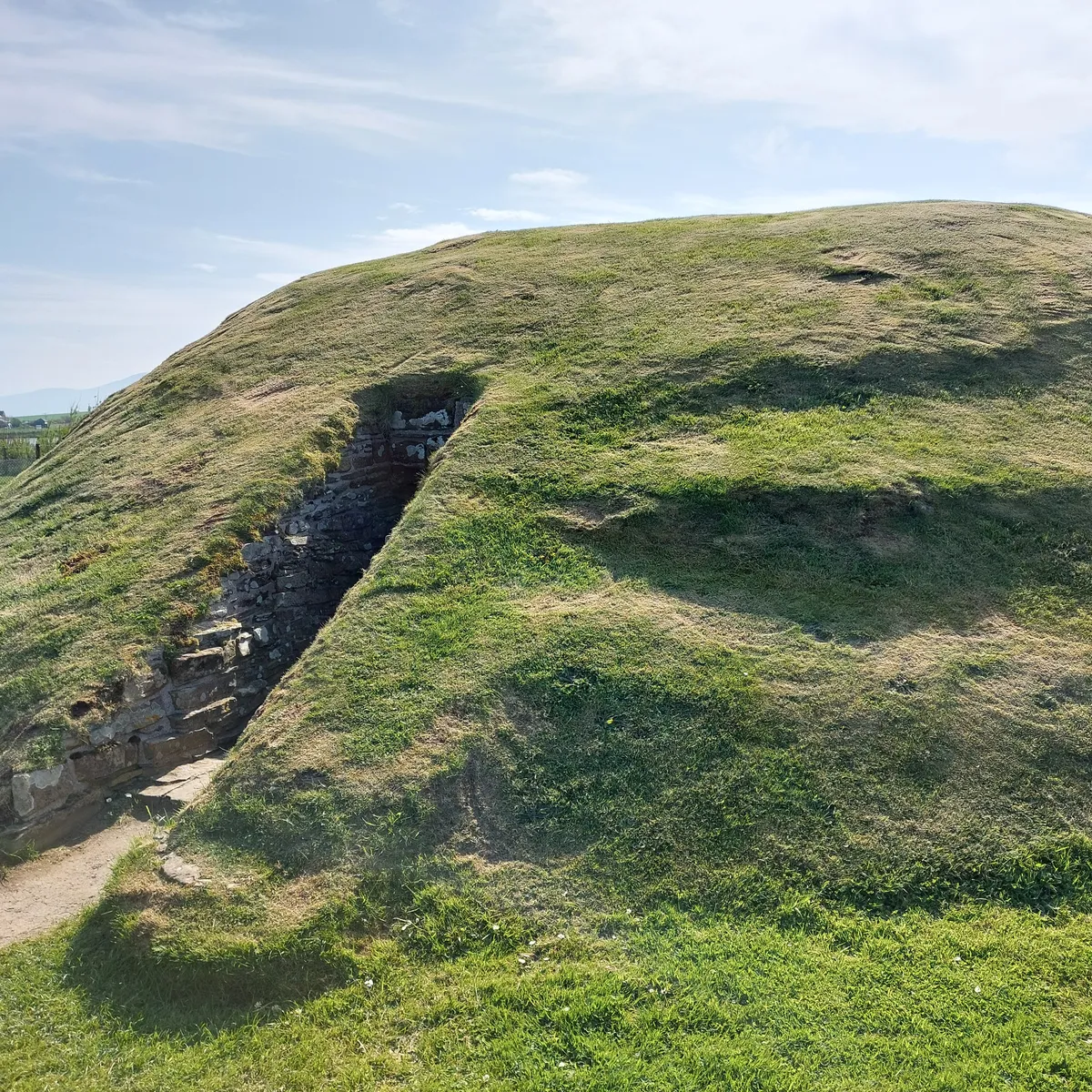 Unstan chambered cairn
Unstan chambered cairn, sits right on the side of the Loch of Stenness and just down the road from Maeshowe (its where they recommended we go after denying me the Maeshowe trip on a previous visit) it fits much more into the wider Neolithic landscape of Stenness and is probably the more visited site. It also differs in that like the other two, it has a high central chamber and smaller side cells, but unlike those, it also has divisions made with large stone slabs. In both respects it feels much more like a smaller version of Maeshowe than the sites of Wideford and Cuween which feel and appear very different.
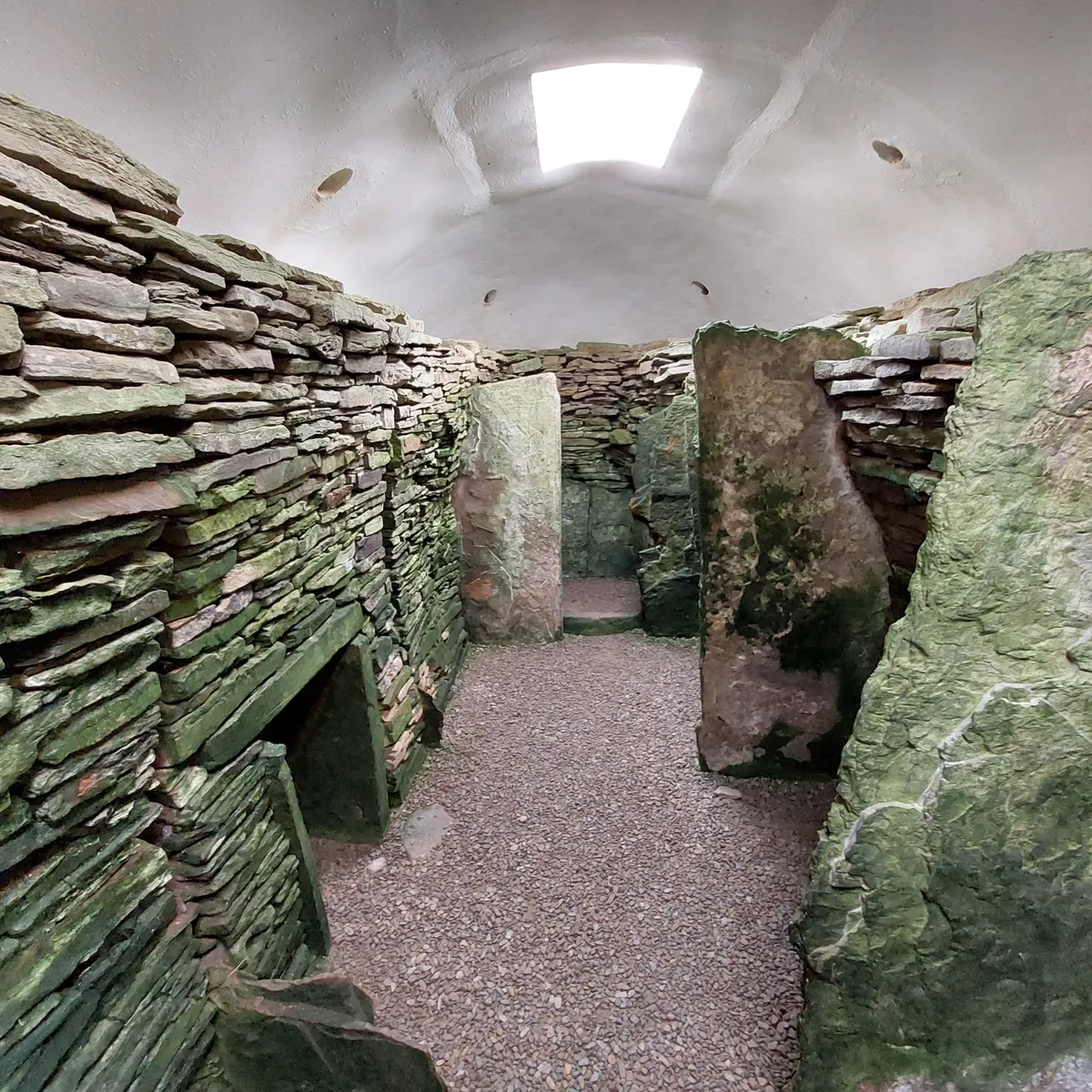 Inside the tomb, showing the modern skylight roof, small cells and larger slabs
Bones, tools and especially pottery was found here, with the usual archaeologists 'get out of jail free' card claiming it was all ceremonial offerings. It obviously held some significance for the neolithic people of Stenness, there are remains of villages close by (one of which will feature in a future blog) and they obviously built this site, Maeshowe and others close but separate from where they lived their lives. In the case of the first two chambered cairns, that’s also true, but they were placed higher on the landscape rather than down by the waters edge which also poses questions. There is plenty of flat land in this part of Orkney, why build up on the side of a hill?
Its a beautiful and ancient landscape in this part of the world and I've been lucky enough to visit now on several occasions. More to come on this place and time period when I get further time to write.