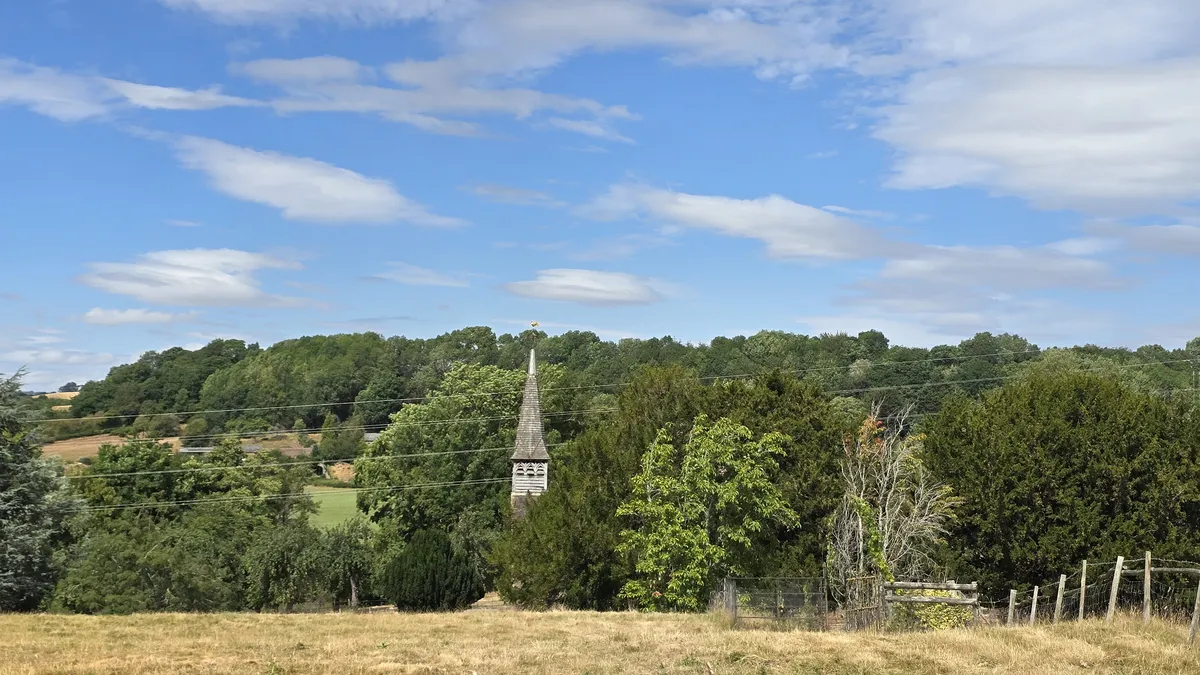
On English churches (part 4) - St Michael’s
I wasn't going to give this church a full post as it was more an amusing distraction on a hike than a destination in its own right, but I decided it had enough interest to warrant its own post.
First off, I'm not going to say where this church is, although its not a secret. I am in a round about and slightly pretentious way, making the point that the breadth of the UK is filled with places like this. Remote, calming, beautiful and nearly a 1000 years old. Go out and find your own, visit and hopefully appreciate what’s there. Sign the guest book (most churches have one) so hopefully its kept open for another 1000 years.
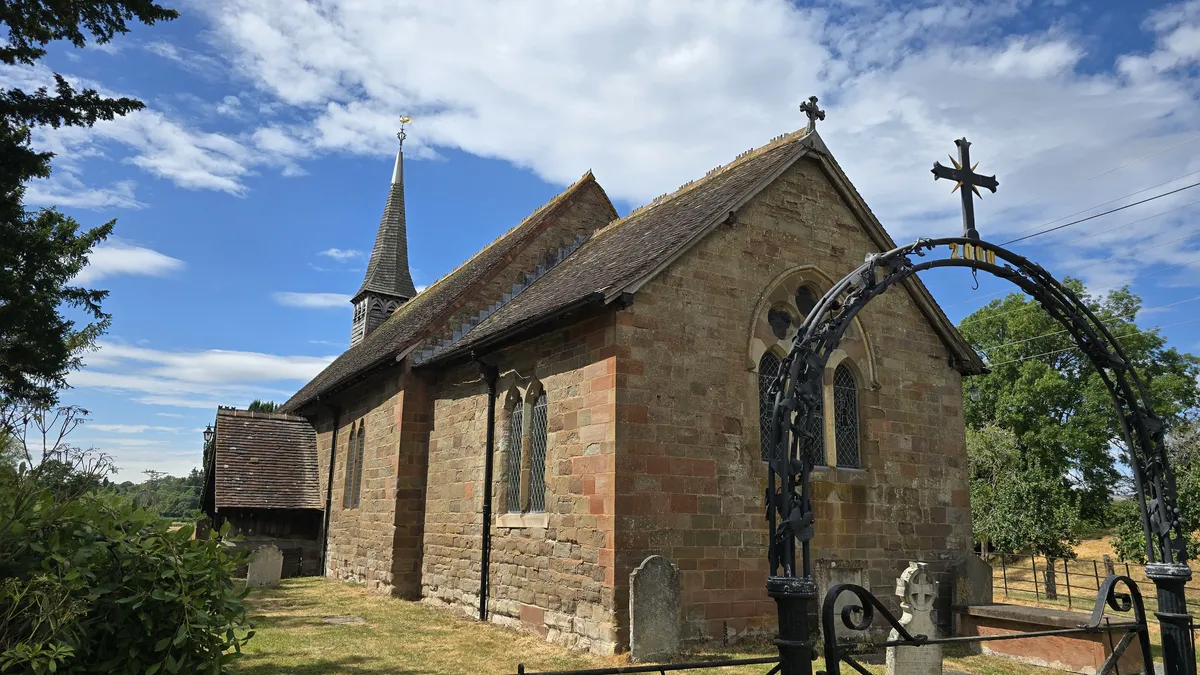
When this church was built here in a fairly remote part of Worcestershire it was to serve presumably a fairly small rural parish. Its still a rural area, but now a large A road runs past just over the river, the water board is digging up the country road outside it and the farm yard at the entrance has two barns of steel plates and concrete instead of wood and stone.
Its a small church made of sandstone, with only a nave and a chancel so its essentially a rectangle rather than the more common crucifix shape. The nave, which makes up the majority of the building, is almost entirely Norman. The north doorway which is now bricked up, is topped with an interesting zig-zag carving which is also repeated in the chancel arch inside. The doorway also has a very weathered tympanum carving of 'the tree of life and whorls so similar in that respect to Kilpeck.
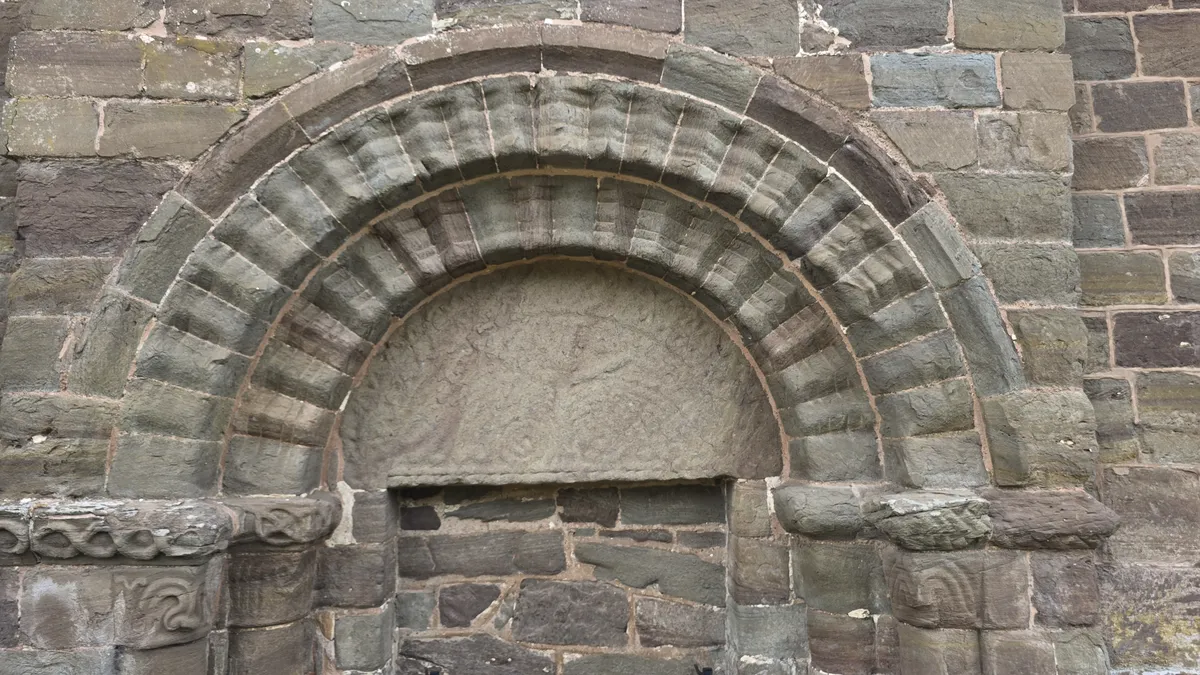 The bricked up North doorway and Norman carvings
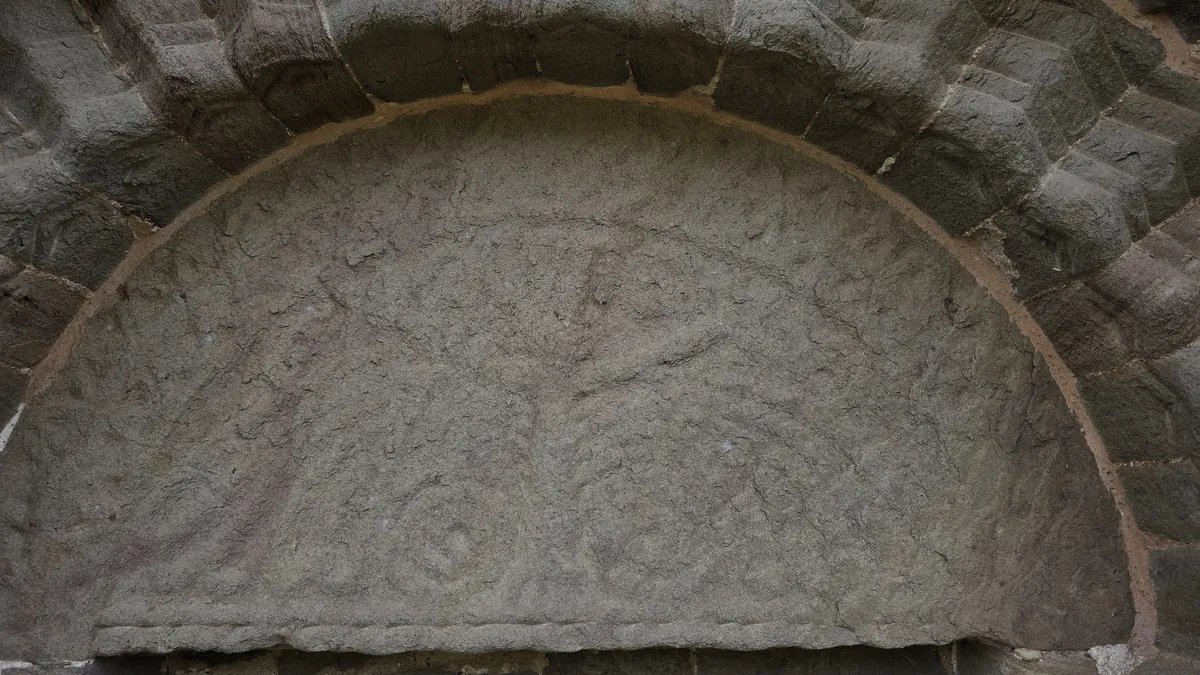 Close up of the tympanum - slightly edited to improve clarity
Inside are deep Norman lancet windows.
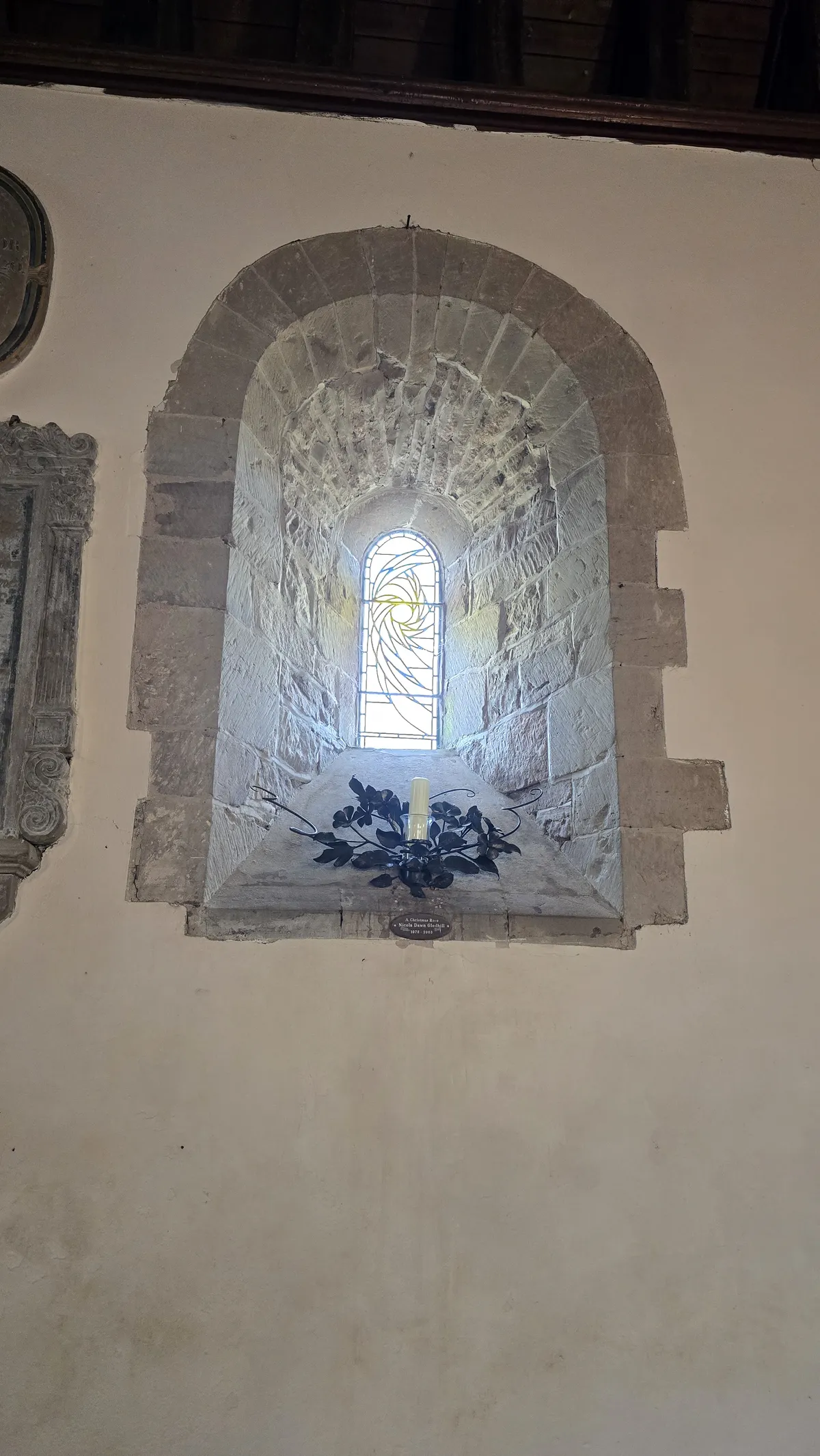
A lot of the interior is then a result of 19th Century alterations but its not entirely a bad thing as the East window is early William Morris from about 1863 and differs from later designs by Edward Burne-Jones.
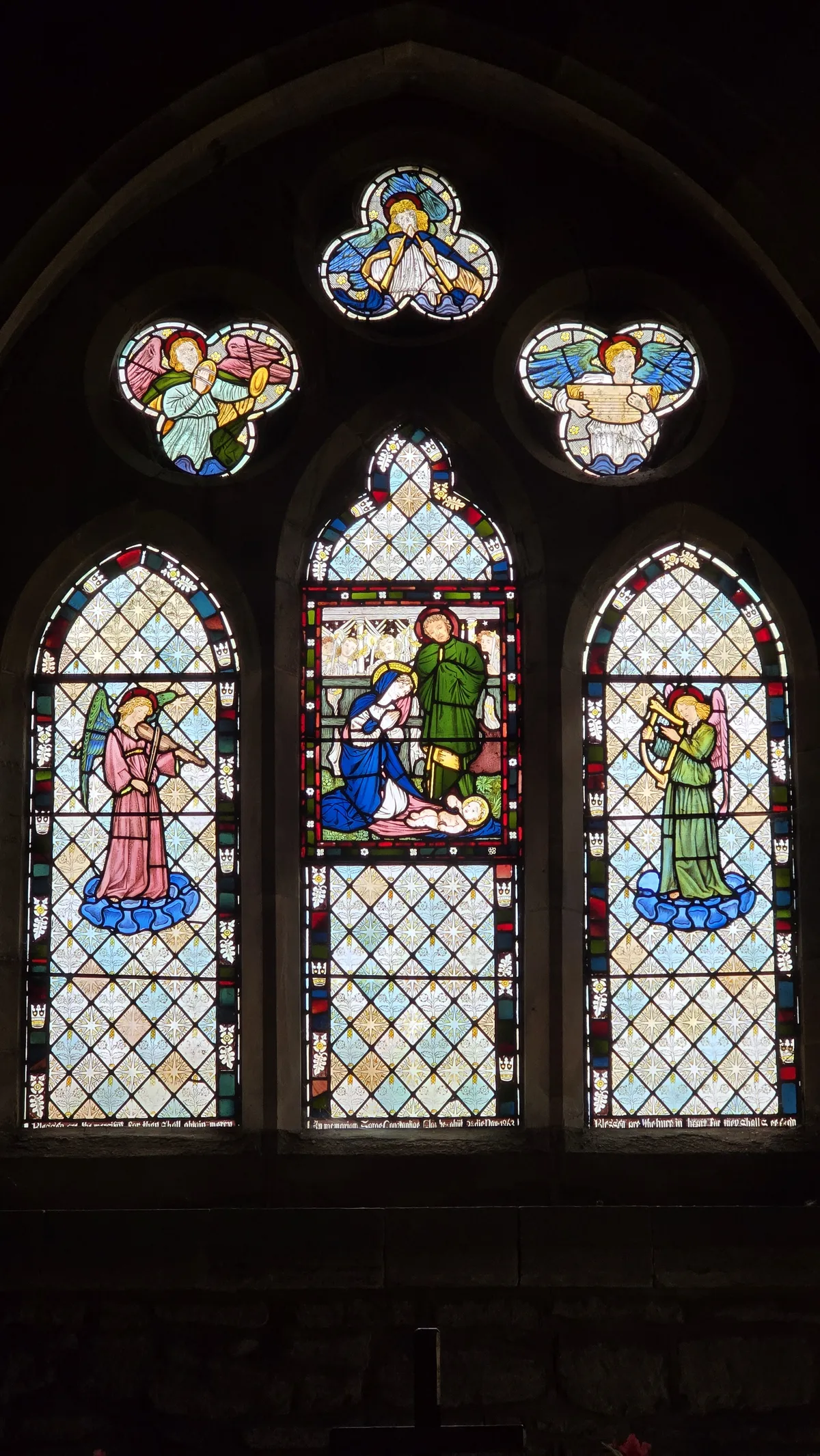 William Morris window
The wooden tower is also a later addition from a similar time period but does add more than it takes away from the Norman exterior. I had the place to myself when I visited which, given I was a sweaty mess, is probably for the best. Just one small parish church in Worcestershire amongst 100s across the country but well worth a stop on a hike.