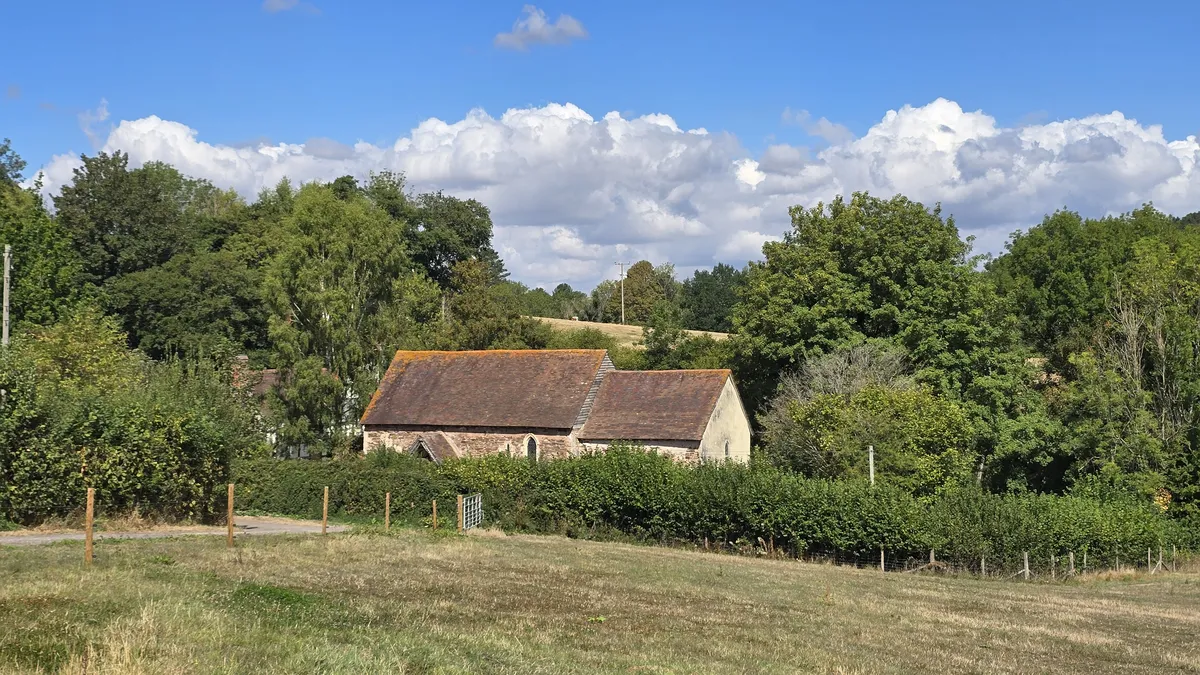
On English churches (part 7) - Old St Bartholomew’s - Sapey
Been a bit church heavy on the last few blogs, but not to worry, there is more old metal and concrete from WWII posts coming soon.
Specifying this church as 'Old St Bartholomews' as there is a Victorian era St Bartholomew’s built up the road in around 1877 that would be classed as the 'current' parish St Barts. I'll get to why that is shortly;
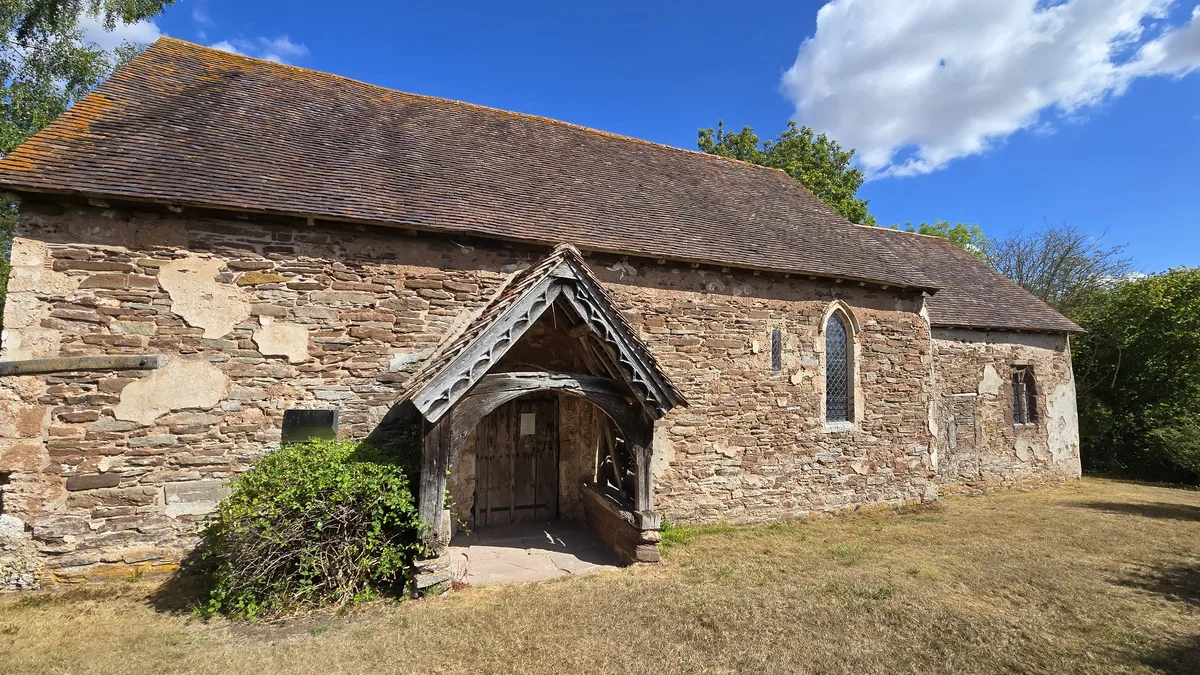
This site was mentioned in the doomsday book of 1086, so a church has sat here for a very long time although there doesn’t appear to be any sign of the pre conquest version. The current 'old' church is Norman, built probably at the end of the 11th century. Its a simple nave and chancel layout and 3 small Norman windows remain, one of which is pictured below.
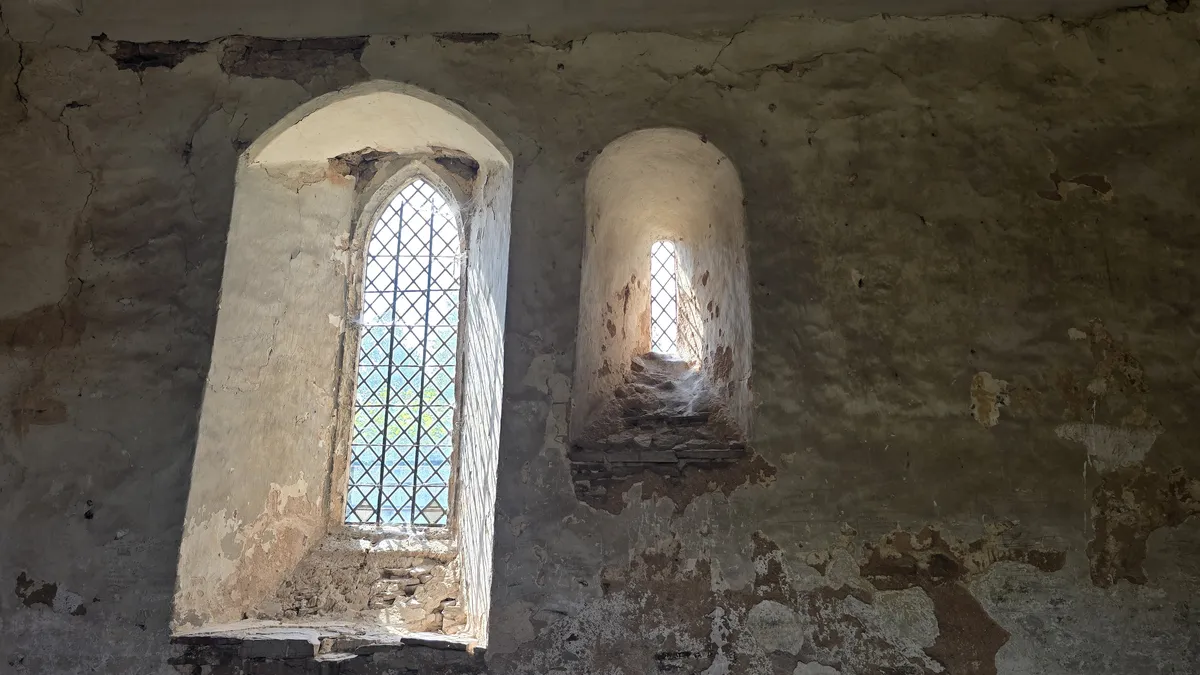 Small Norman window, next to larger more recent version
Over the next few hundreds of years there were additions, the wooden porch is 14th century, as is a window in the south side of the chancel. There are also signs of interior wall paintings from the 17th century (look at those in a moment). As time rolled on, the small settlement in this remote part of Worcestershire declined and the small church became less convenient.
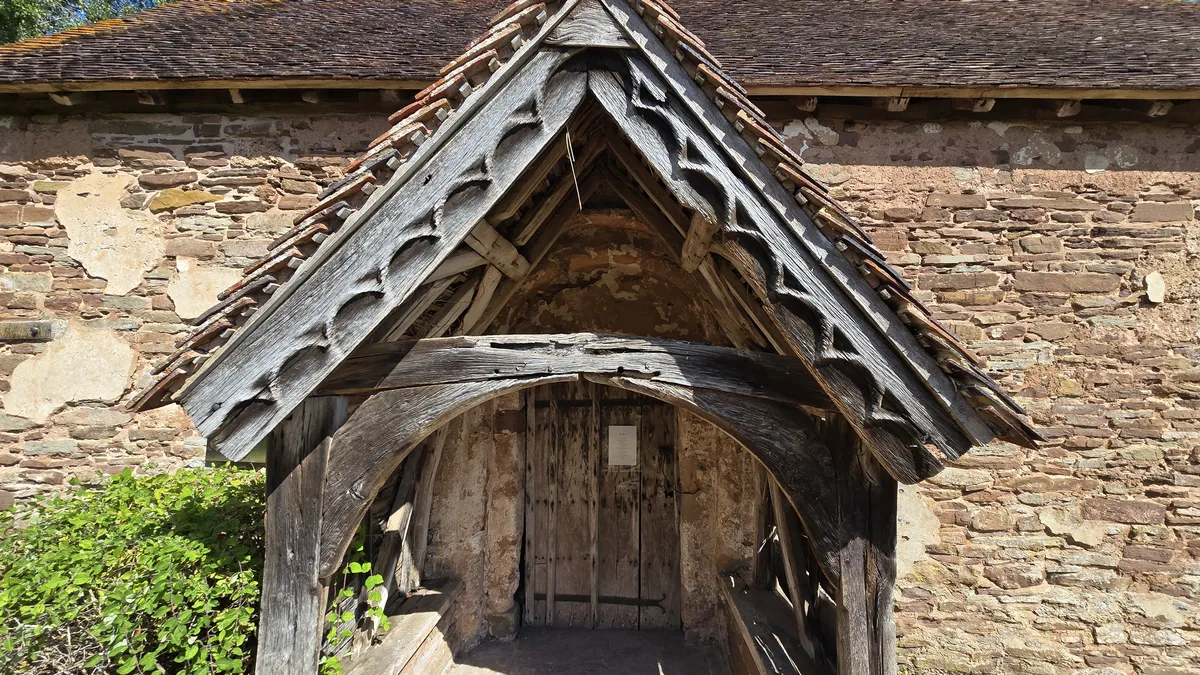 14th century oak porch
Which brings us to 1876 or there about, when a local landowner, one Edward Bickerton Evans who made his fortune in vinegar in Worcester city gave land nearby to build a new parish church, the current 'new' St Bartholomew's.
Once completed, the fixtures and fittings including the Norman font were moved to the new church. An order (by whom and to whom I can't fully establish) was then given to knock down the old church to a height of no more than 6 feet. The remaining locals presumably ignored this on the assumption no one was coming down the small road in this remote part of Worcestershire to check. Instead they continued to use the church building in various ways, storage of tools, shelter for animals etc. It was certainly patched up over the years, but not especially well maintained. There is graffiti on the plaster inside showing that people visited and left their mark over the years of the 20th century.
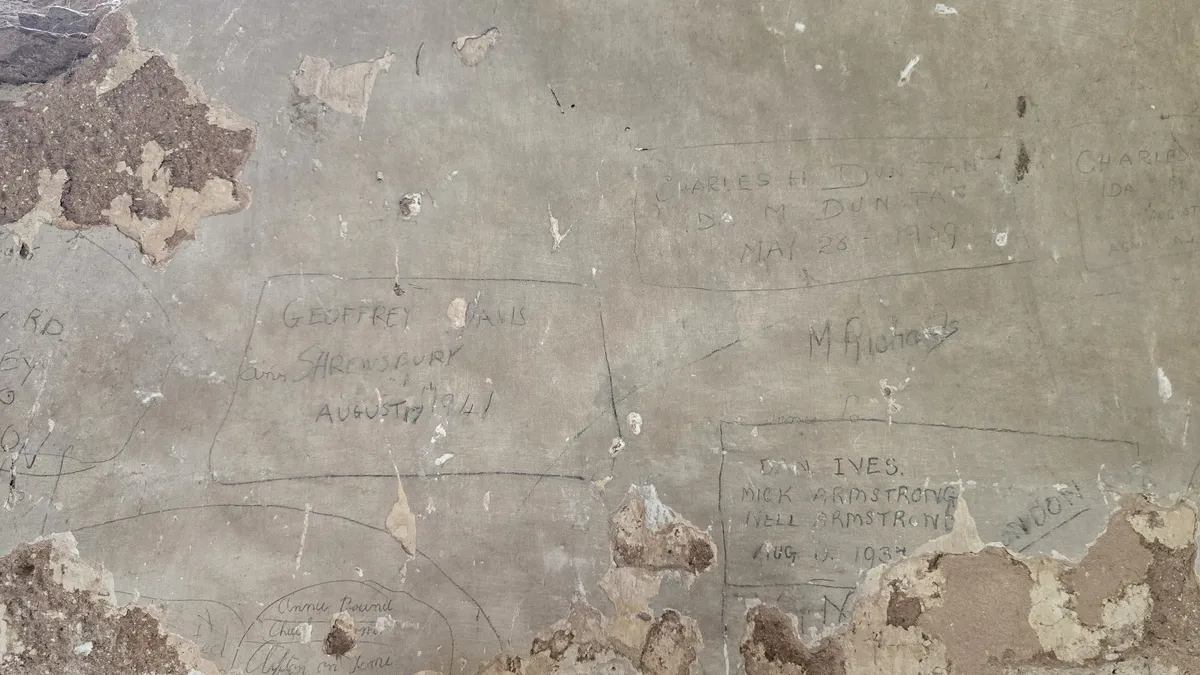 Some of quite a few pieces of graffiti from between 1900-1990 or so
Finally in the early 1990s more people became aware the church was still there and a local trust started to carry out restoration work. Its now under the Churches Conservation Trust who, in collaboration with local volunteers, allow visitors and occasional religious and secular events.
Inside the interior is austere with crumbling white plaster, as mentioned above, there are signs of medieval wall paintings and from the 17th century a visible hind leg of a lion from a royal coat of arms.
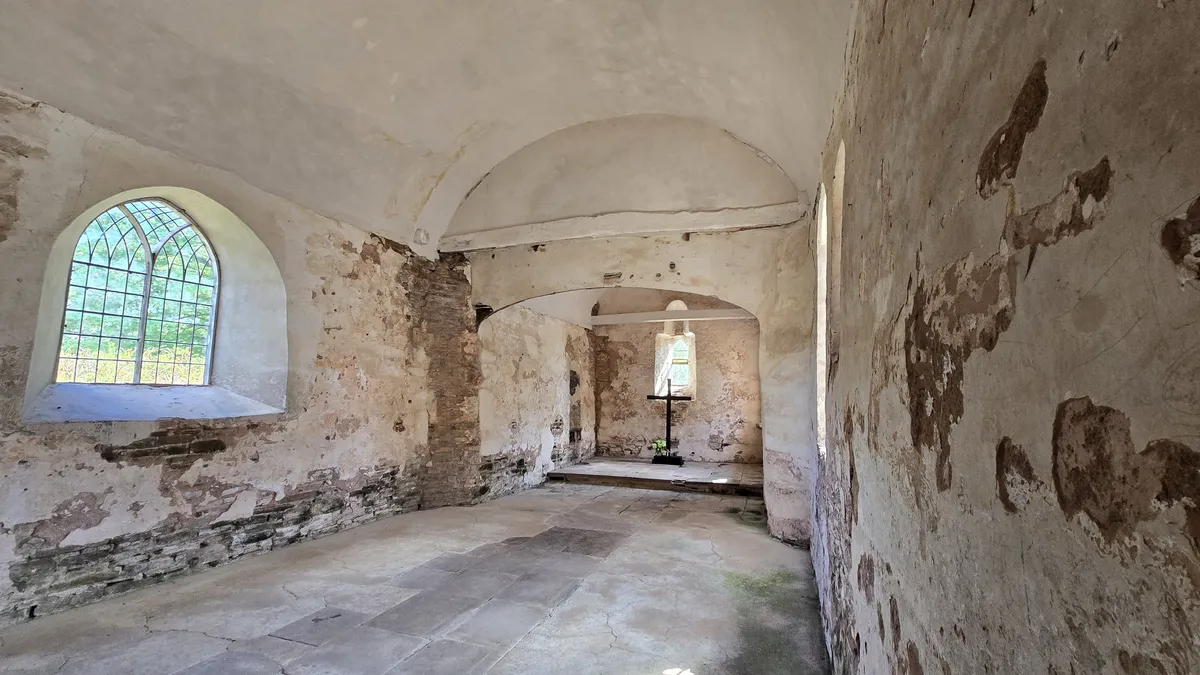 Showing the interior of the church
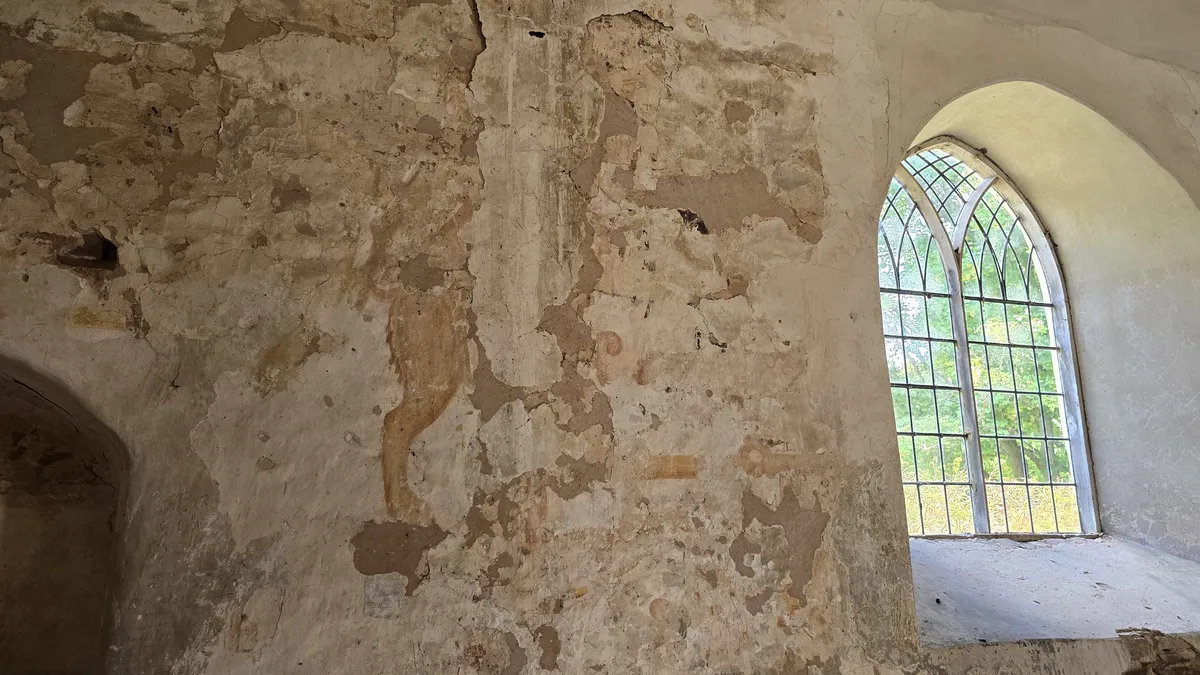 17thC wall painting of lions hindquarter from a Royal crest
The floor is stone and clay and this along with the walls and lack of any normal church additions give this amazing sense of openness and light. For all its history, this location is so remote (walking only, you can't drive to it really) its a really special place to visit and take in the energy and quiet of this church that amazingly was never lost to time.