WW2 In Orkney - Barriers and POWs
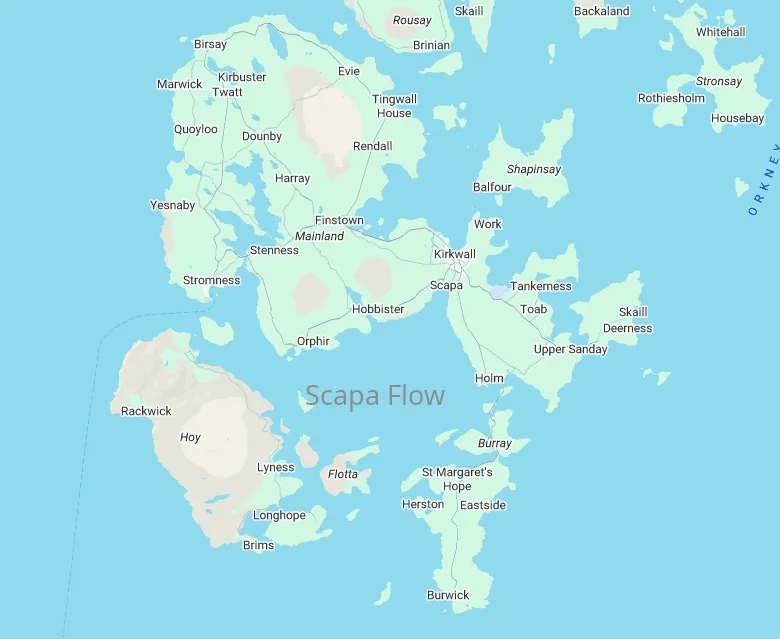
The Orkney islands off the top of Scotland form almost a ring around Scapa Flow a piece of water that was used by the British Navy as a deep water achorage in both wars and held the intered German Imperial fleet at the end of WWI.
It was in the 2nd world war however when one of its greatest tragedies occurred. On October 14th 1939 - HMS Royal Oak was at anchor with a crew of 1234 men and boys (teenage sailors in training) when U Boat U-47 was able to penetrate the defences and get into Scapa Flow. There she unleashed torpedoes, an action resulting in the death of 834 men. I may do a full blog on the story of the 'Bull of Scapa Flow' commander of U-47 and how she was able to negate the British defences at some point, but for now, the story is well documented elsewhere.
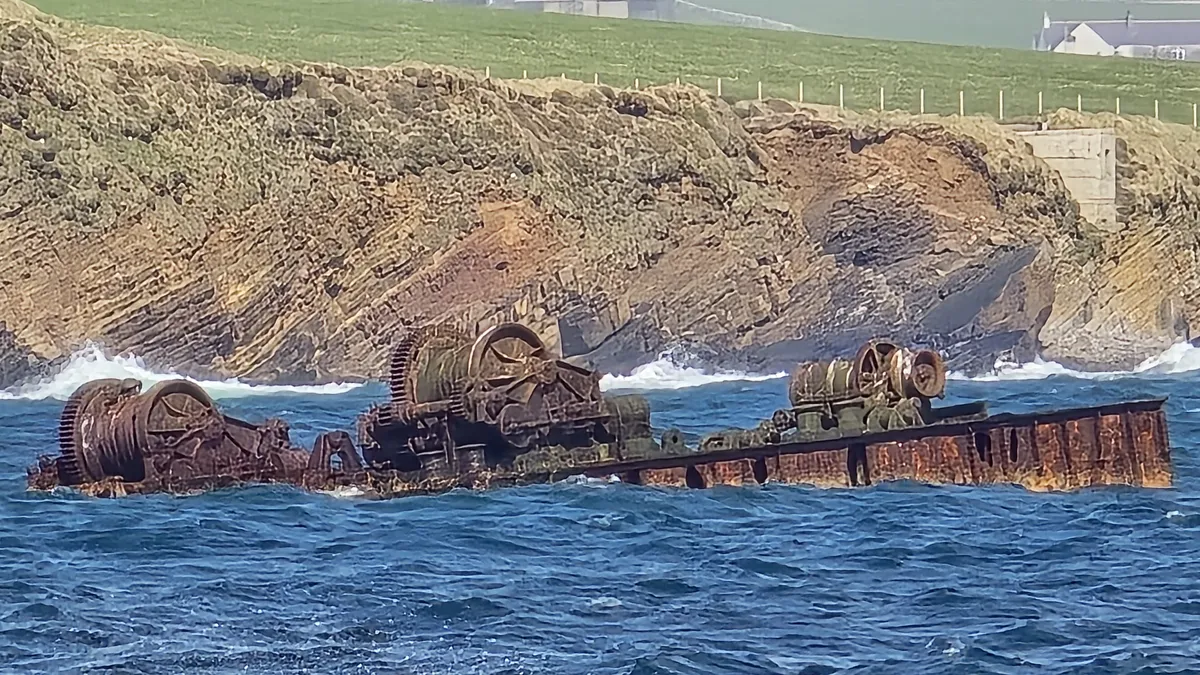
That's the context, but prior to that attack the British were well aware of the risk posed by the various entrances to the flow, especially on the Eastern side that faced out to the North sea. In 1938 surveys had show that Kirk sound specifically had a deep clear channel that would allow passage of enemy vessels into the Flow. The merchant ship 'Seriano' was sunk as a blockship (literally a sunken ship to be used as a barricade) and put in the channel, but both Kirk and Skerry sound (to the south) remained reportedly open. These reports were backed by Admiral Sir William French commander of Orkney and Shetland. As war grew nearer, other blockships were sunk, but at least one was still afloat on the night of 13/14 October 1939.
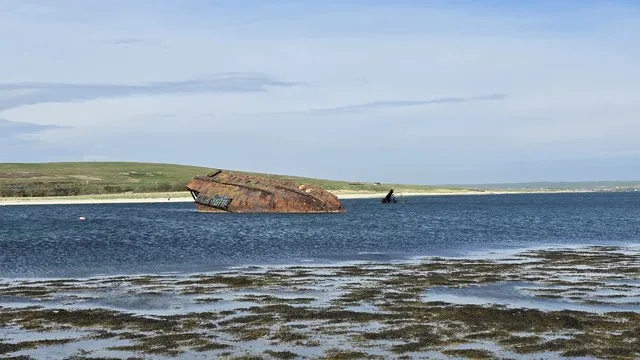
Blockship
At this time, the First Lord of the Admiralty Winston Churchill came north to Orkney to see for himself the situation. He decreed that the blockships were insufficient and proper barriers on the eastern approaches should be created. The contract was eventually awarded to Balfour Beatty & Co who started assembling men and machinery in and off Holm on the northern side of what would become the Churchill barriers. Camps for the men were also setup on the Island of Burray (see map above) and the two small islands to the north, Lambsholm and Glimsholm. Work continued through 1940 and into 1941, but by this time the workforce had been depleted by conscription and men choosing to build defences on the south coast (where possibly the better weather meant they didn’t hurry back to Orkney).
By late 1941, the war in North Africa had resulted in large numbers of Italian Prisoners of War (POWs). Early Jan 1942 saw 600 of them shipped to Aberdeen docks and then on to Orkney (which must have been a shock after the desert). Most eventually ended up on a camp on the island of Lambholm. Language issues aside, most then were able to work doing tasks under the supervision of NCOs and Balfour men. One early sticking point in February was that POWs were not supposed to work on the war effort under article 45 of the Geneva convention. Despite this, a compromised was reached whereby the project changed to building roadways (causeways) to allow travel between the islands (with of course the added extra of blocking U Boats!).
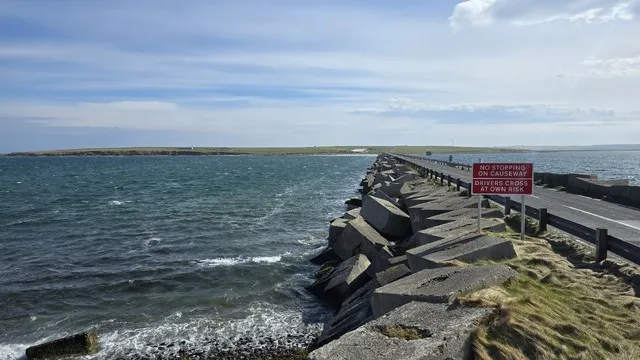
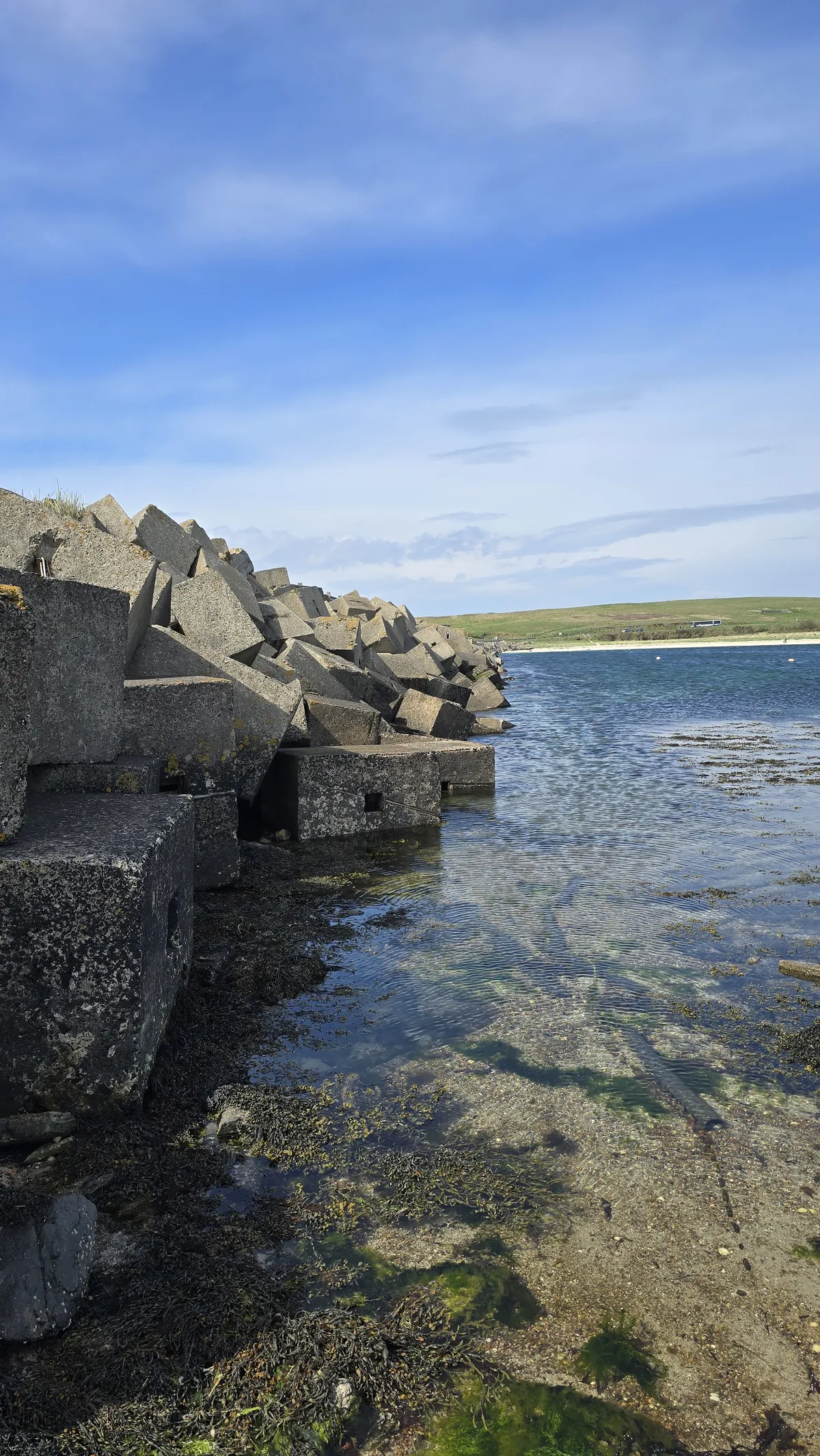
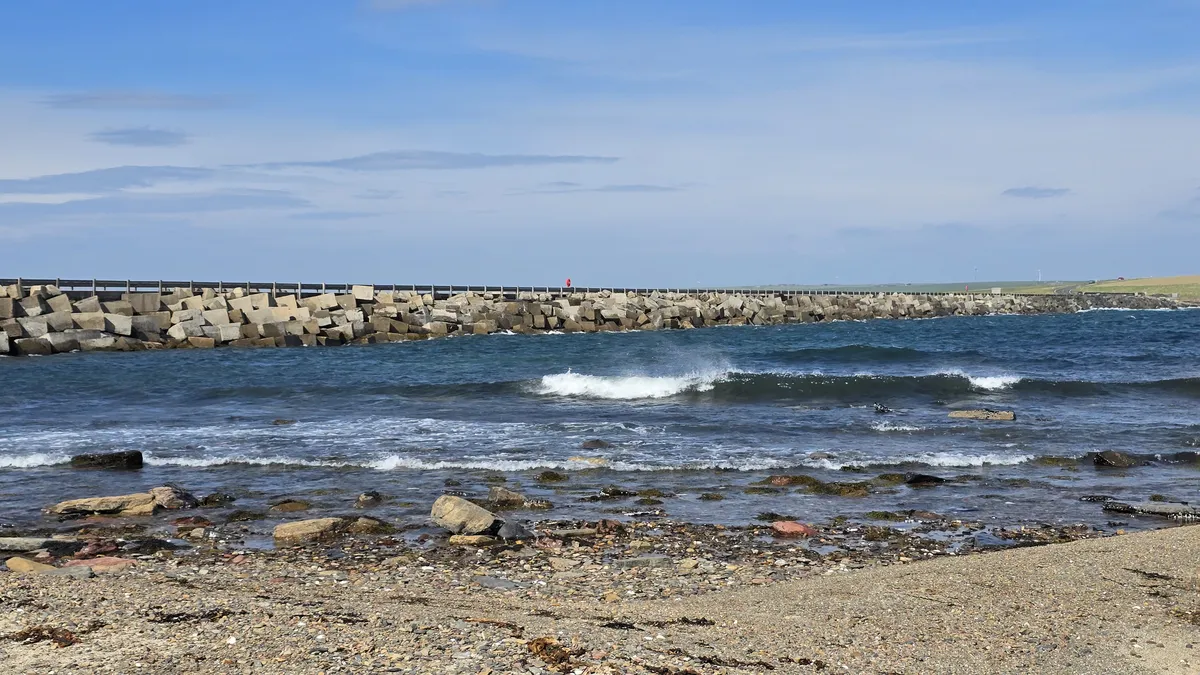
The roadway as it stands today
Time continued to move on, and clearly among the POWs were skilled men who had worked in various aspects of construction prior to the war so some began to get paid at an increased rate and permitted to take on more skilled aspects of the work. Two main camps existed. POW camp 60 on Lambolm and camp 34 on Burray, communication between the two camps was only allowed once Italy had capitulated. Both camps had a social side with men trading with the locals as well as partaking in musical and theatrical performance. In camp 34 particularly, wood carved items were traded by the imprisoned craftsmen with the locals for food and other goods.
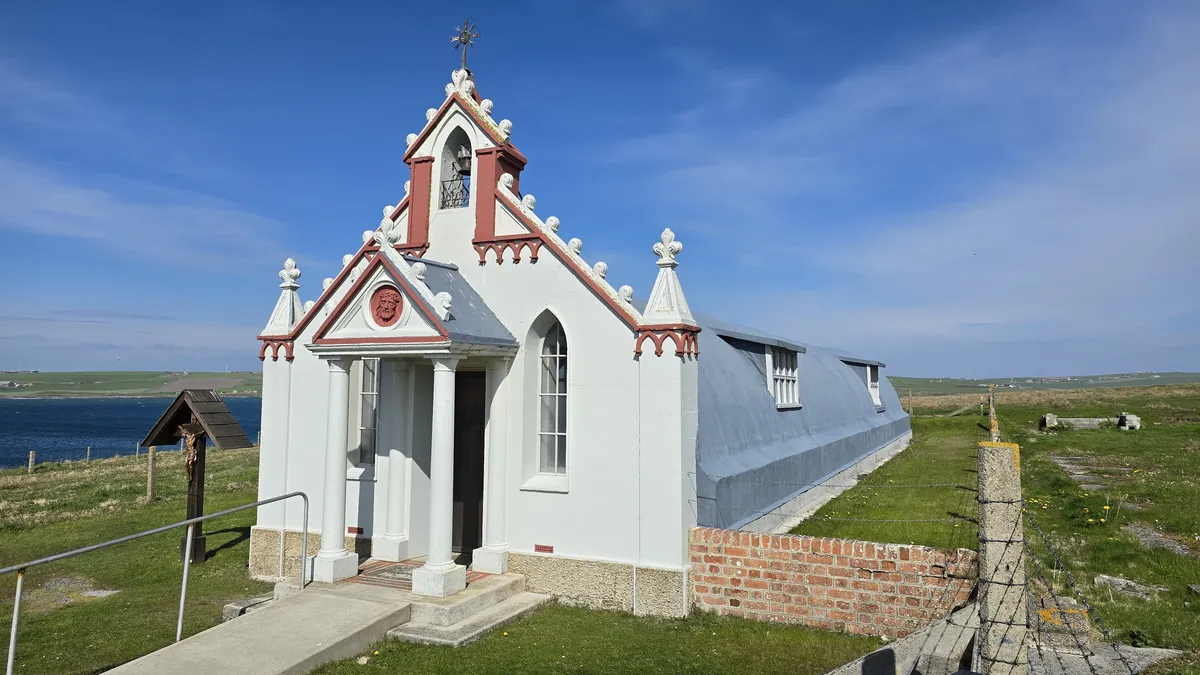
Both camps had men who were not just talented at craft, but genuine artists. One of the prisoners, Domenico Chiocchetti particularly had come to attention of the army commanders for his skills. The commander Major Buckland had provided two unused Nissan huts joined together, originally as a school to educate the illiterate prisoners but later this was to become the chapel that still stands on Lambholm.
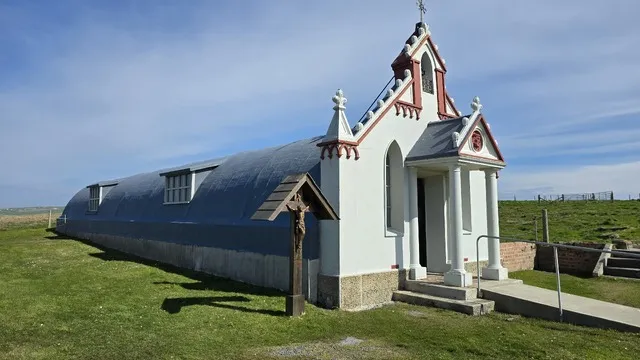
The Italian Chapel on Lambsholm
Chiocchetti was tasked with the job of creating the chapel from the combined huts and together with some fellow craftsmen and artists from the camp, created something beautiful that still stands today. They covered the interior walls of the hut with plasterboard and painted frescos to reflect churches they knew. Wood, iron and brass was either provided or salvaged from the wrecks to provide features, candlesticks and the rood screen. Concrete from the work on the barriers was also provided and gradually worked to create the church frontage.
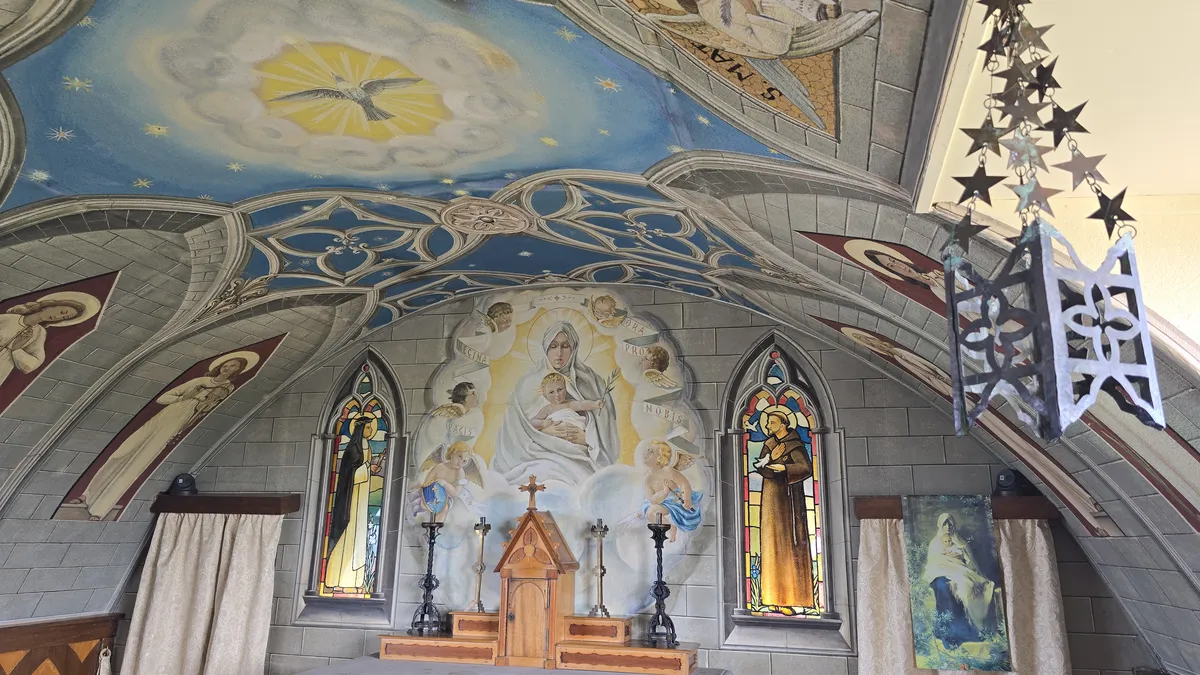
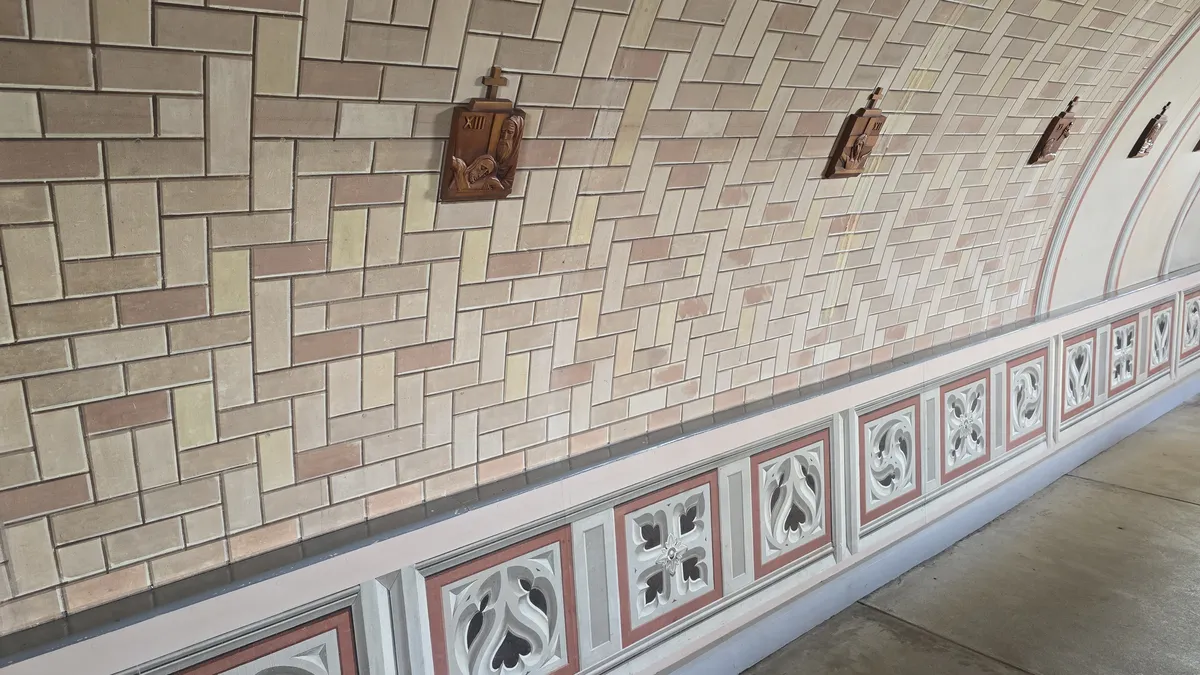
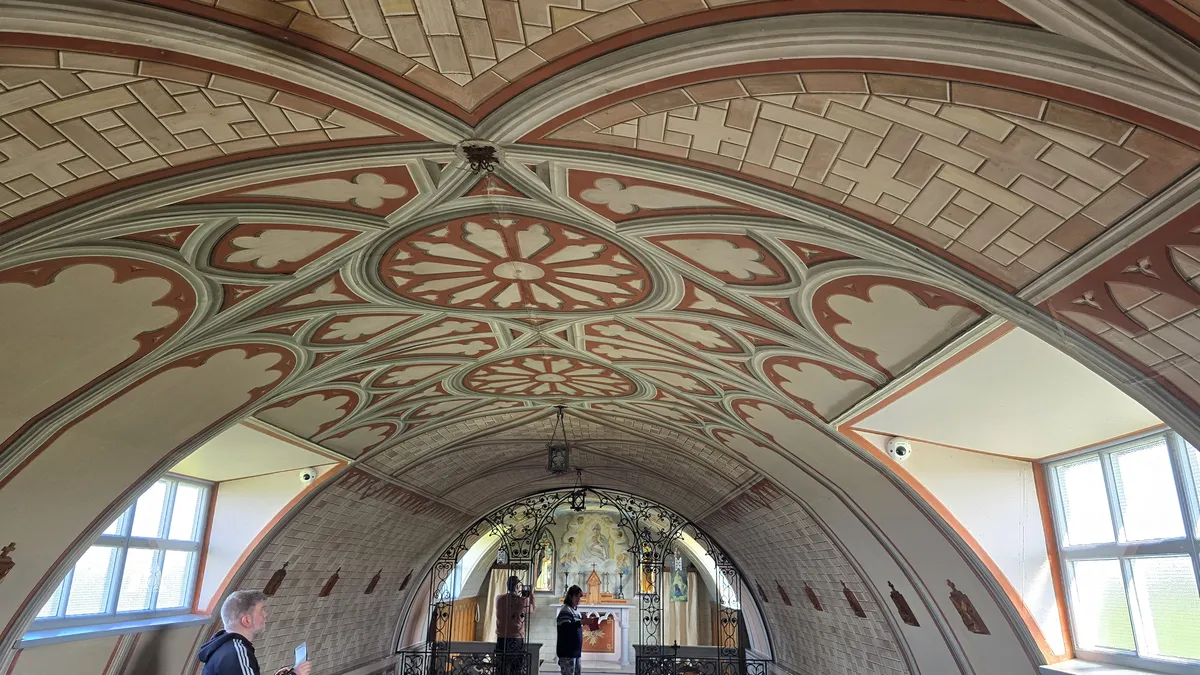
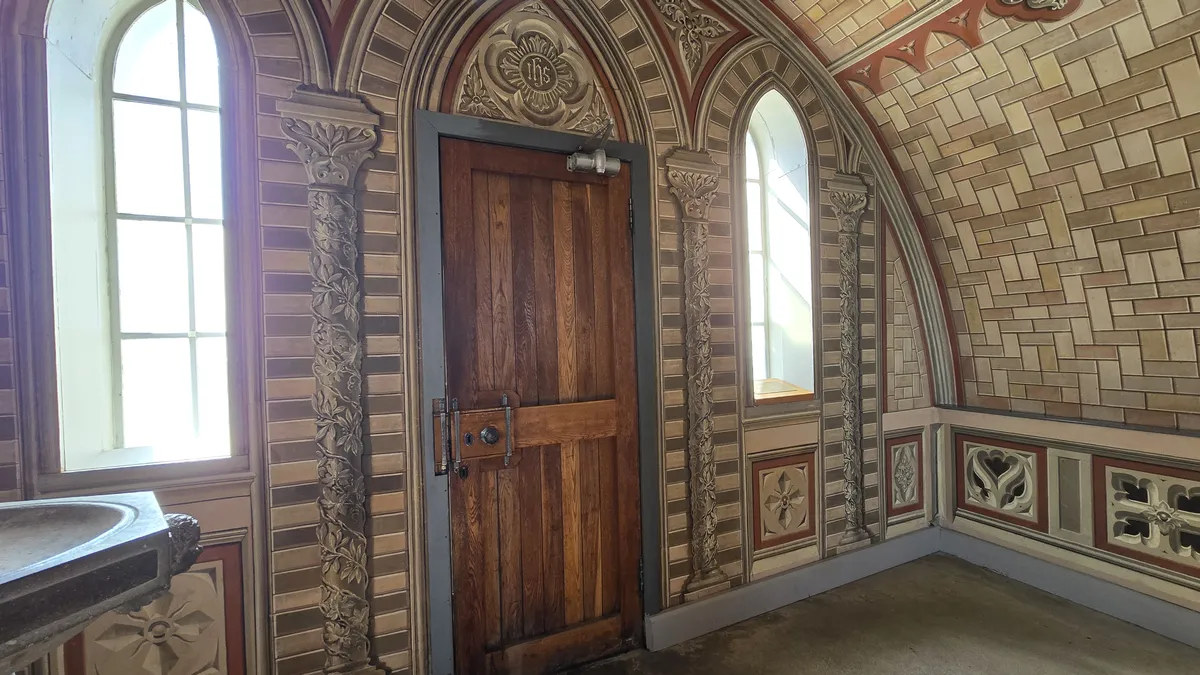
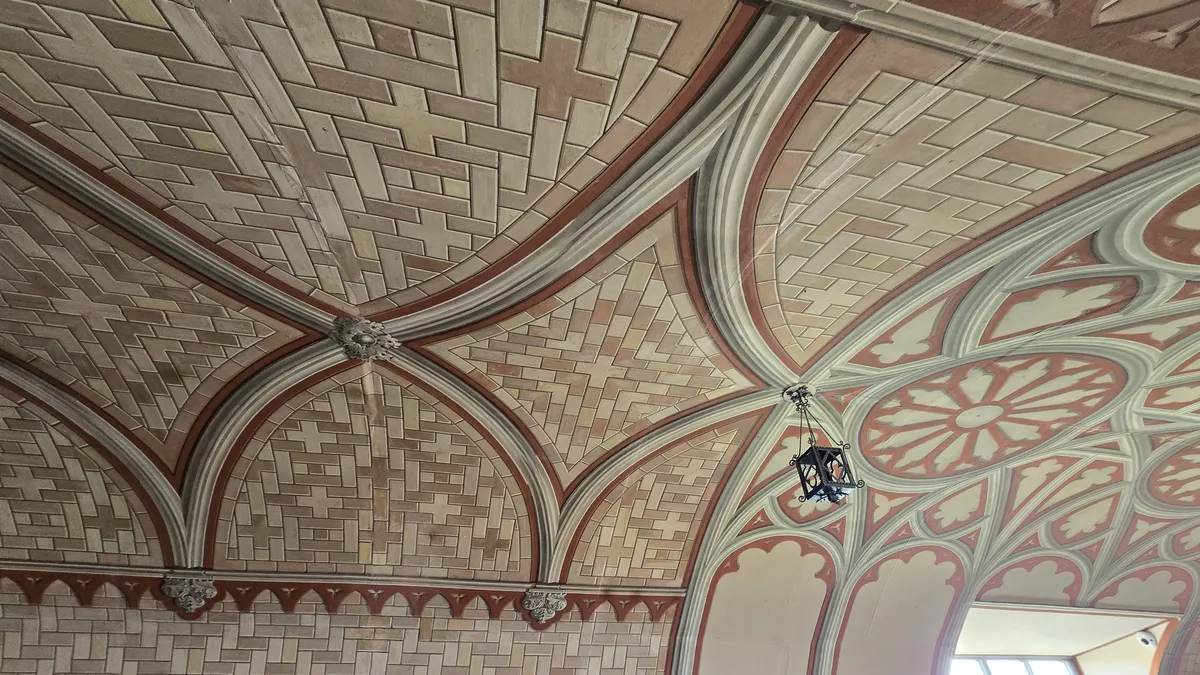
By the end of 1944, the POWs slowly were returned home, including Domenico Chiocchetti. Remarkably in 1960 he returned to Orkney for a period of time and assisted in restoring the chapel that he had so beautifully decorated. The full story can be found (in English) here
The barriers still stand and parts of the blockships are also visible at various states of the tide as a reminder just how important the defence of this deep water harbour was to the British fleet.
Across Orkney less visible reminders of this time still exist and a future short blog may look at a former gun emplacement I got to explore.