Neolithic Orkney (Part 3 - Villages and massive stone circles)
Just outside of the town of Stromness in Orkney sits a piece of land around two lochs - the loch of Stenness and the Loch of Harray. This piece of land is probably one best collections of neolithic sites until you reach Turkey. I've already discussed the amazing Maeshowe and the chambered cairn at Unstan but there are other sites here and all warrant a viewing.
Prior to my schedule booking I had some time to spend in the area around Maeshowe and Stromness. I'd started off with considerably more recent history, exploring a WWII gunnery battery but eventually the rain stopped and I fancied doing the 5000 year old stuff.
First up was the Watchstone. I parked up at the Stones of Stenness for anyone that wants to try to also explore this area. Then set off on foot a short way down the road to the Watchstone (there are other standing stones here, but this was the only singular one I did). Standing some 16ft high, its worth a short walk to and usually not swamped with the annoying tourists at Stenness. Possibly part of some astronomical alignment with Maeshowe, it now stands alone and imposing on the road next to it, the house opposite and the many many ducks flying over it.
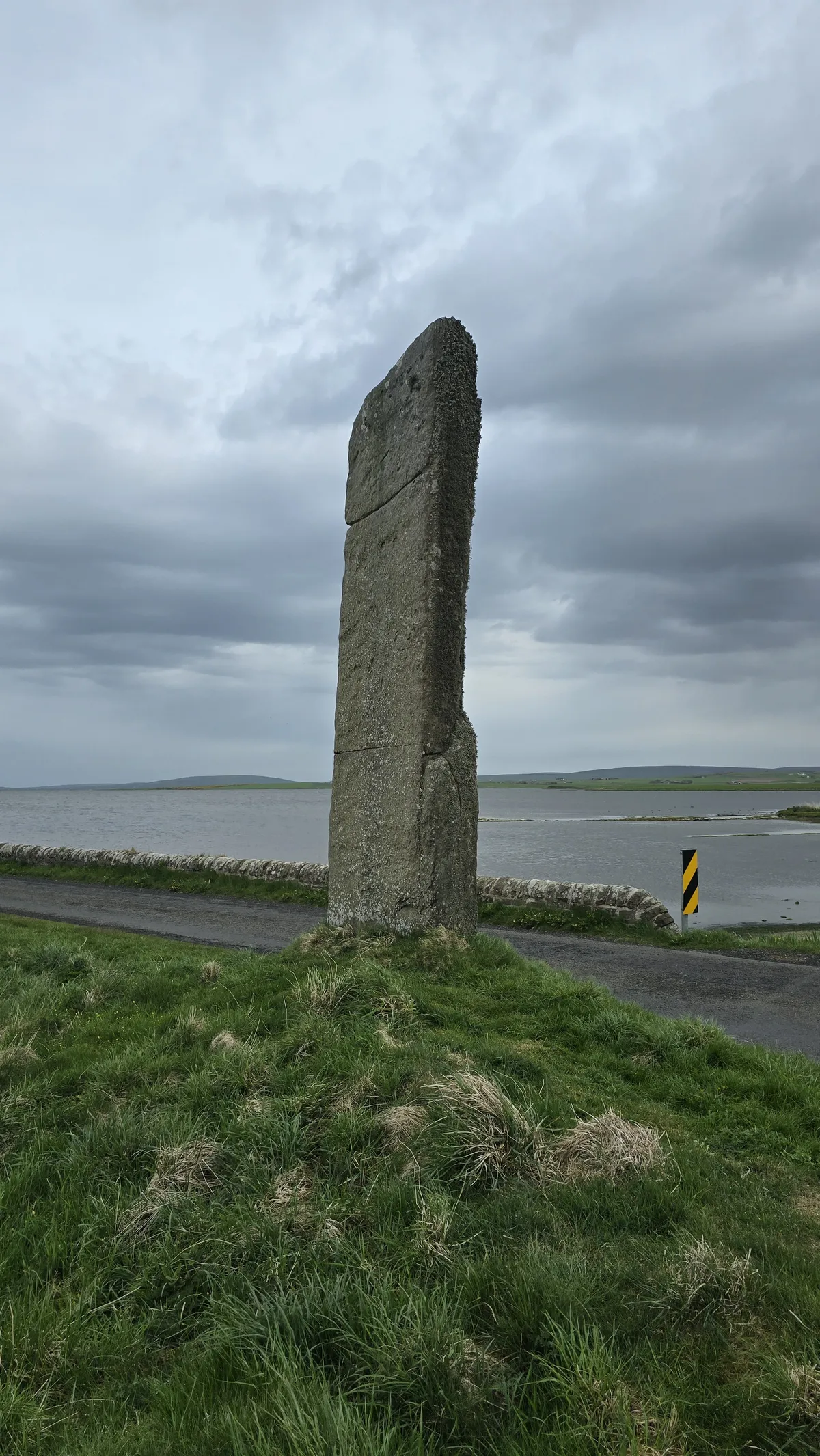 The Watchstone
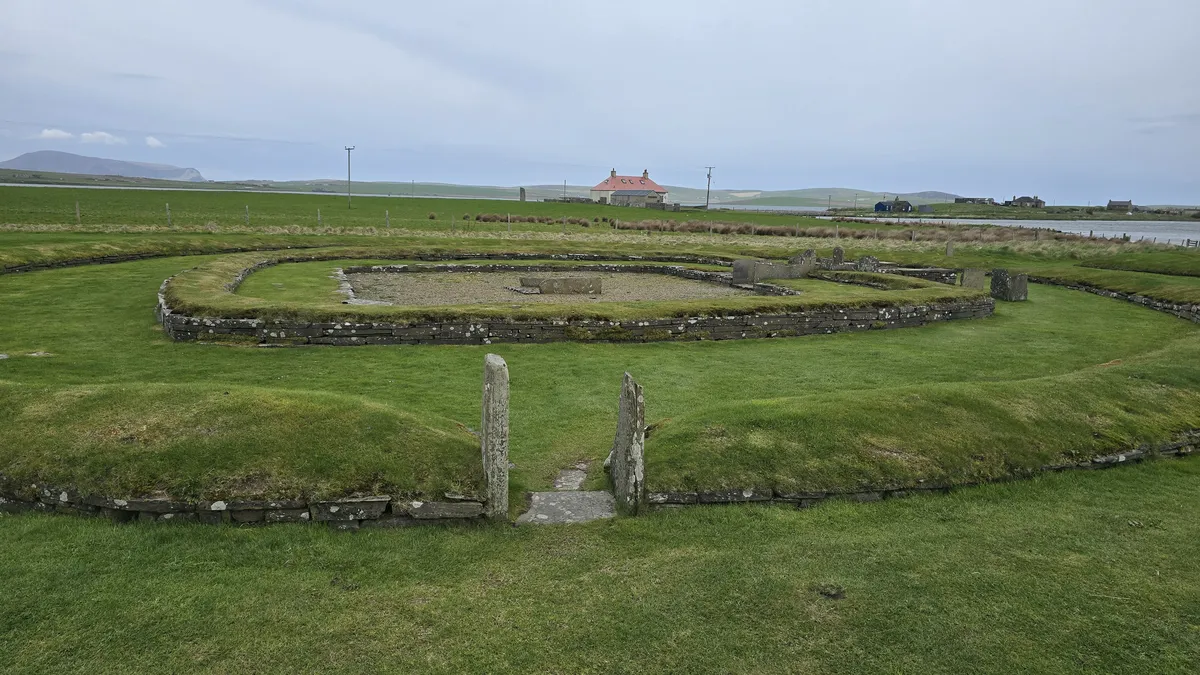
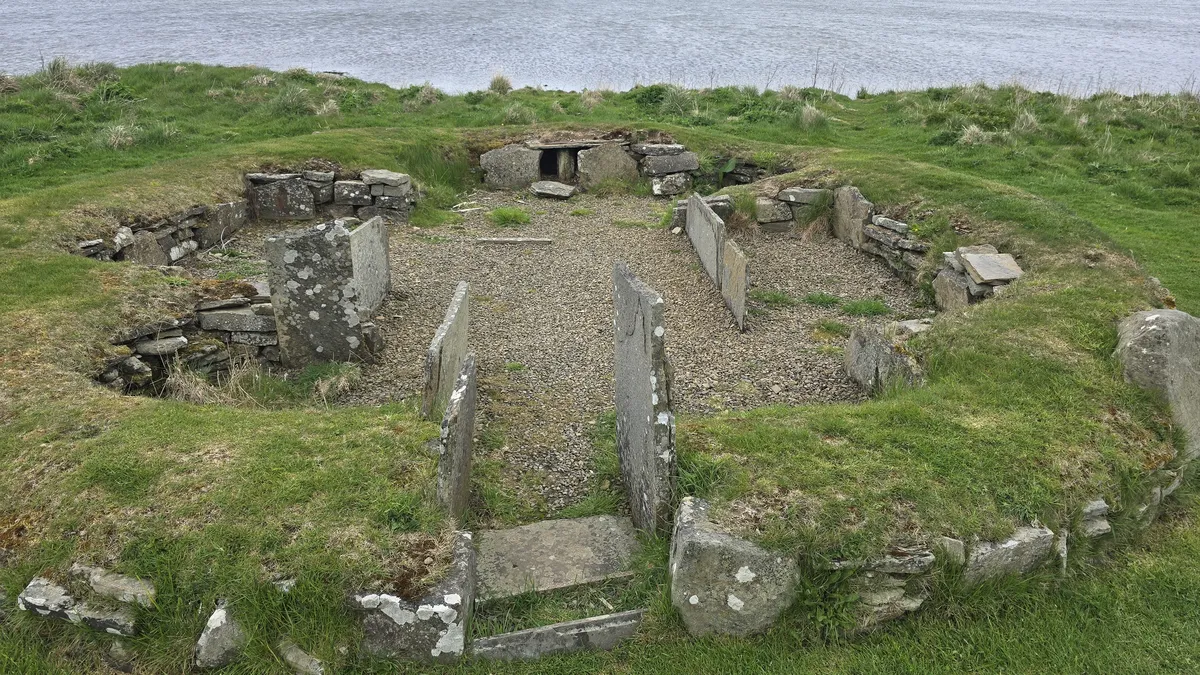
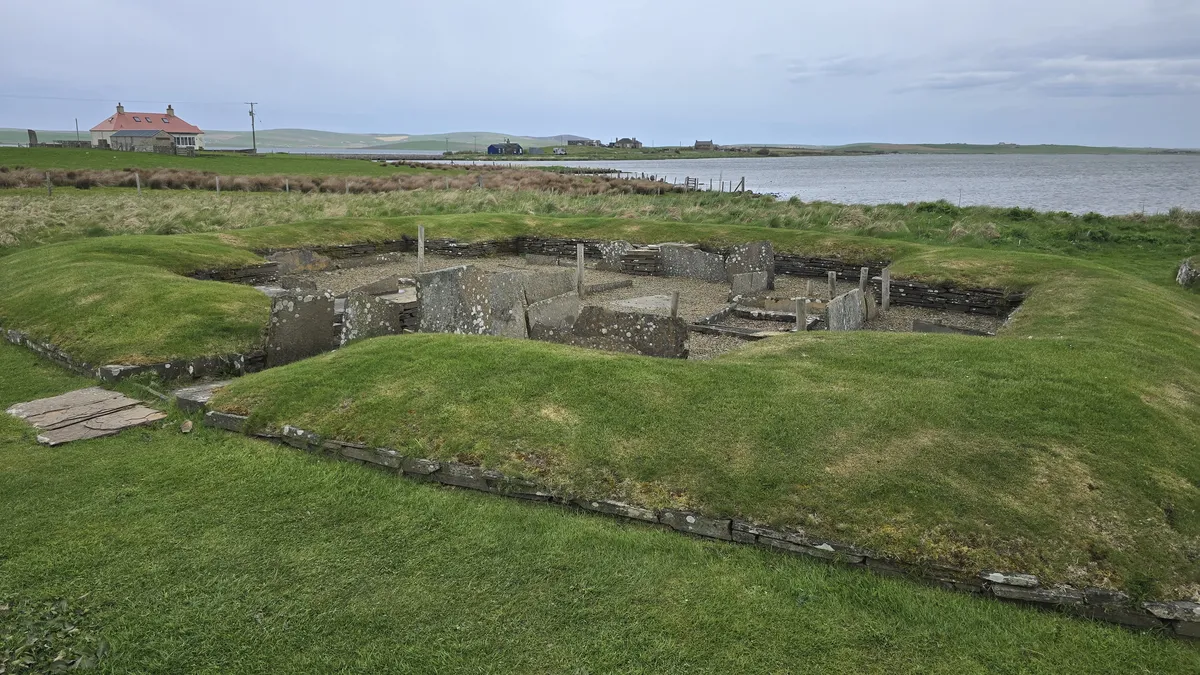
Next stop, as the tourists were still infesting the Stenness stones, was the neolithic village of Barnhouse some 100 metres walk away down a clear path. The site is a collection of houses, with one larger which comes under the usual archaeologists classification of 'ceremonial'. Its possible this was where the builders of some of the other less easy to define sites lived - perhaps even the Maeshowe builders or masons that built the standing stones. There's is less left here than the more famous Skara Brae, but I had it all to myself. Skara is 100% worth a visit, but I'd already been and was struggling to fit everything into today.
The various buildings lie close to the ground but you can pick our entrances, probably areas for sleep and the hearths. Its a site that’s more real, more human than the stones and cairns. People lived here, between these two lochs that presumably provided food. Its cold here on Orkney, windy and they would have sheltered in these small houses around fires (the place of which remains 5000 years later). Its all too real and easy to picture the hardy people who lived here. What's harder is to decode why they built everything else!
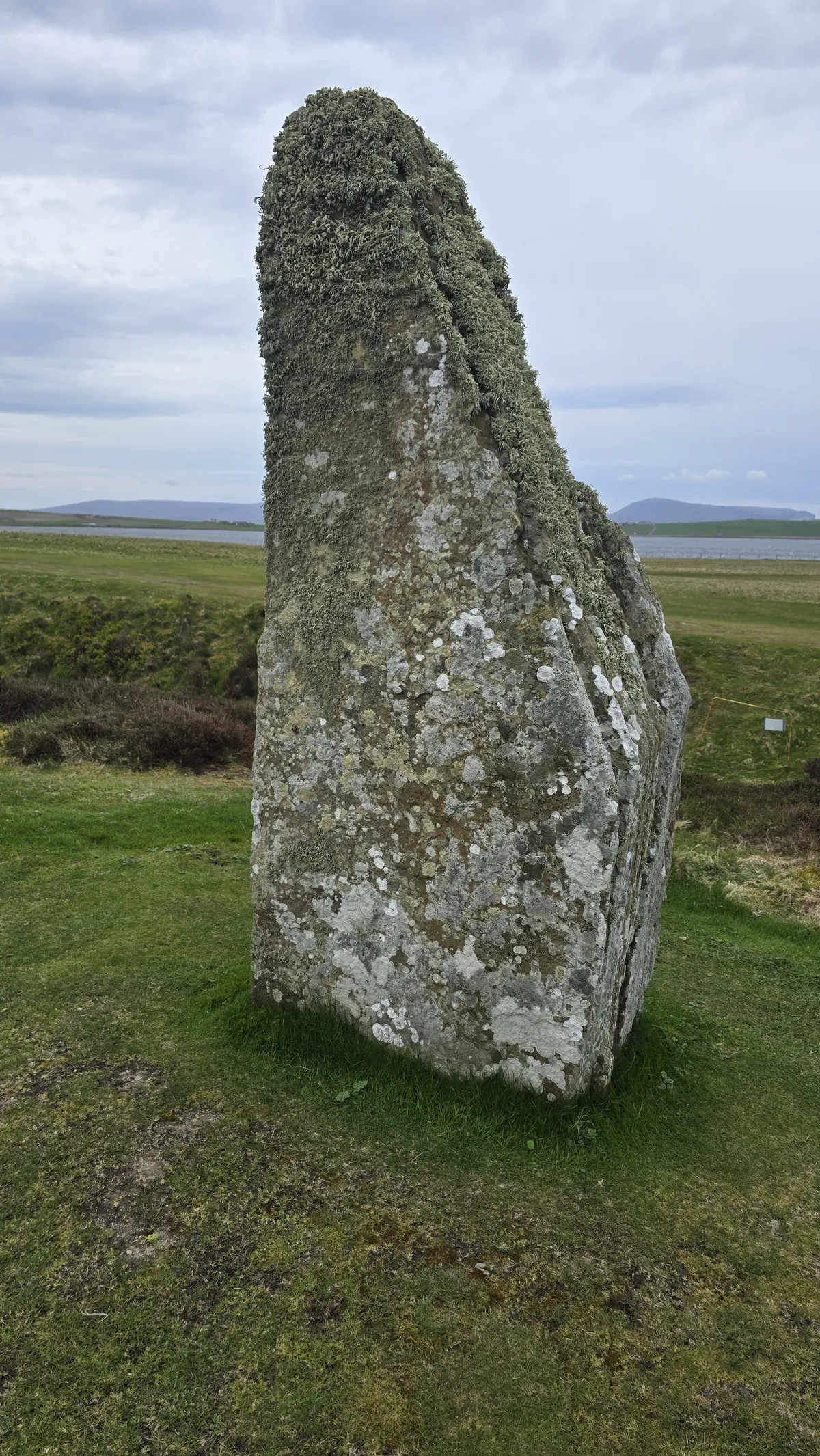
Back to the Stones of Stenness, now I've been here before, there is a picture somewhere of me and the (non history nerd) friends I'd dragged to the site, looking like a gone to seed boy band next to one of the stones. One of my favourite sites in the UK due to sheer size of these slabs of stone. There are 4 huge stones (the largest standing 5.7m high) and then some smaller including two that almost appear to be the sight of some giant stone gun, the imagination suggests perhaps to align to some celestial alignment.
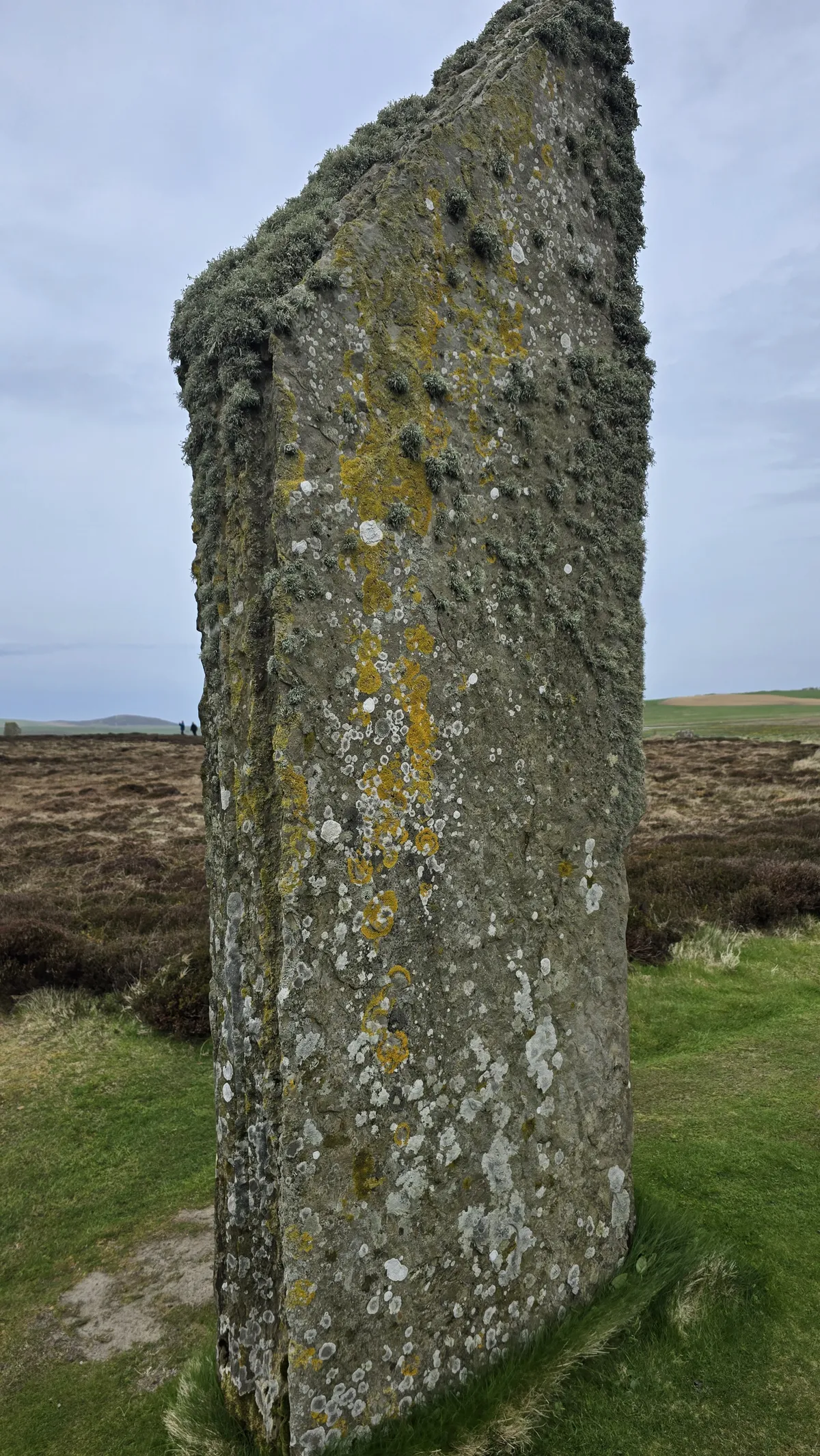
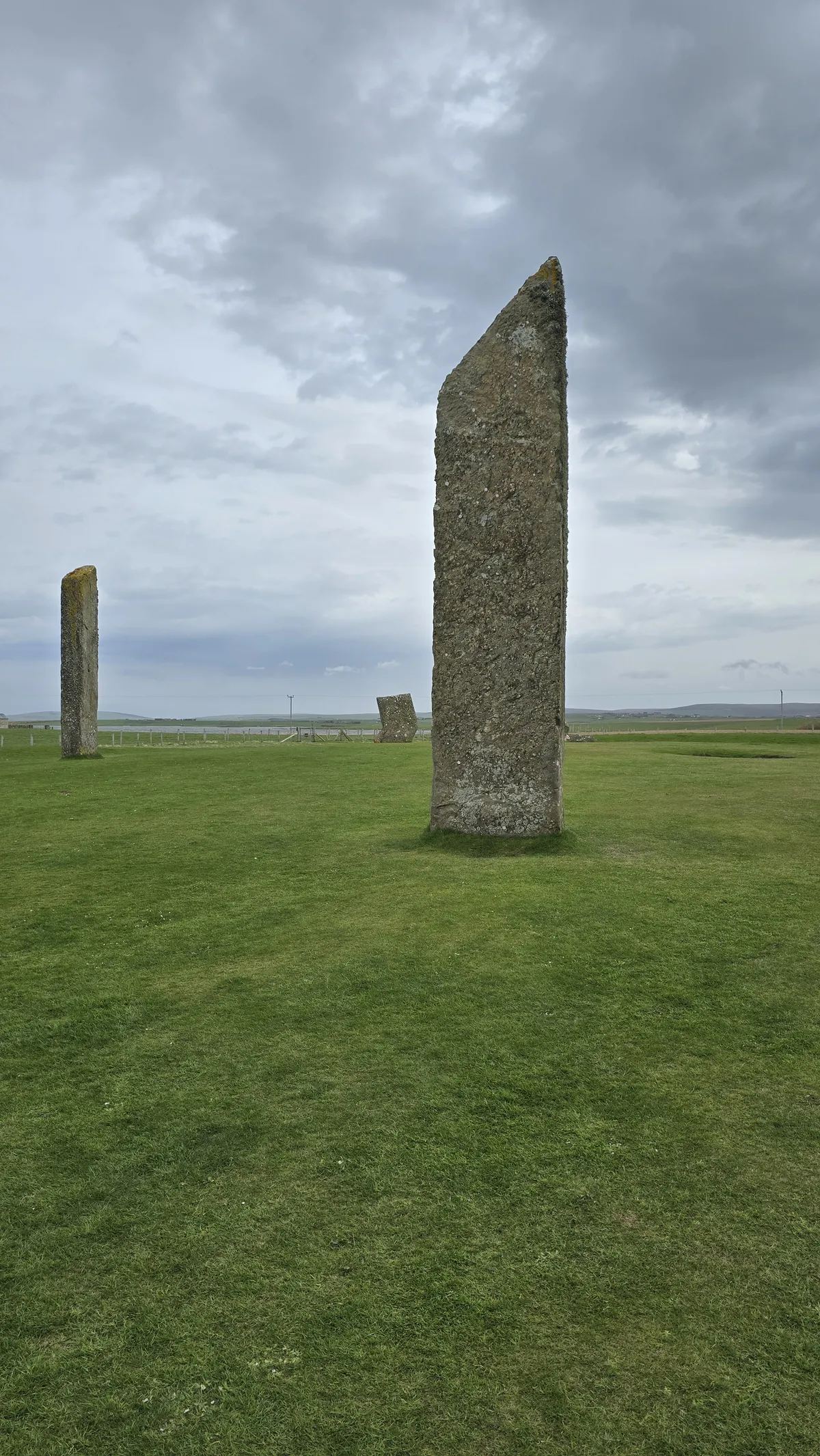 One of the huge standing stones of Stenness
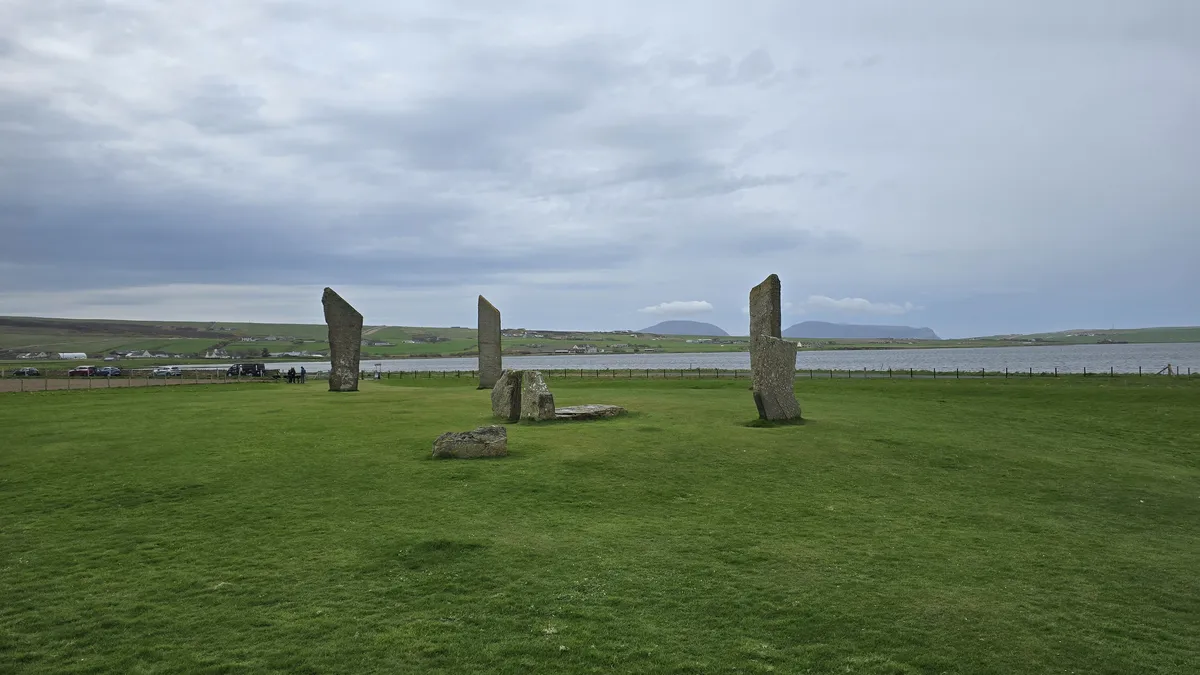
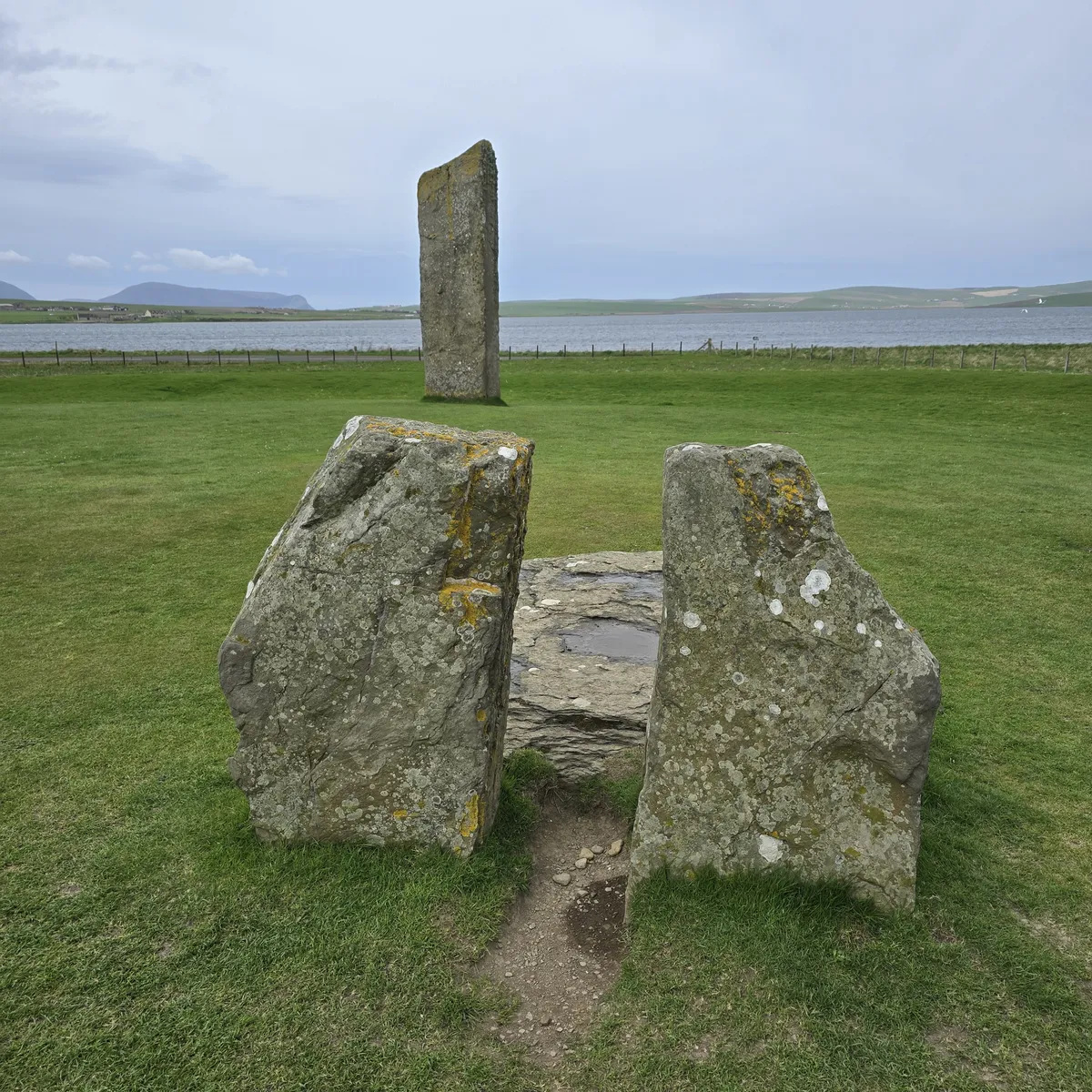
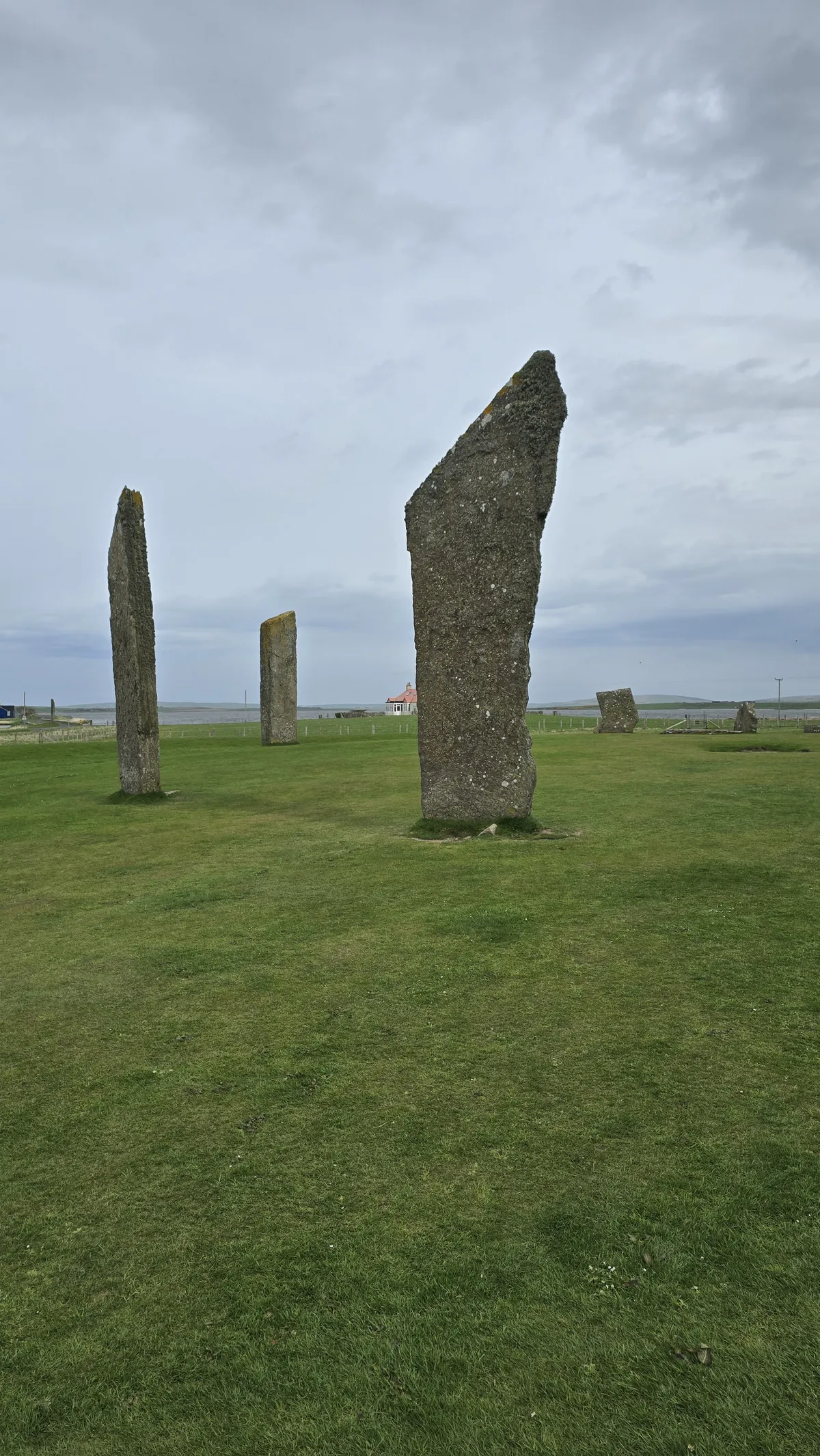
There were more stones here once upon a time, and even in fairly recent history more stood. Some were torn down in the 1800s by a local farmer (proof that not just Worcestershire suffers from this). What remains is still almost unbelievably atmospheric (when the coaches have pissed off) under a brooding sky these huge slabs of stone remain a marker for 5000 years of human habitation here, but built for a purpose we still don't fully grasp.
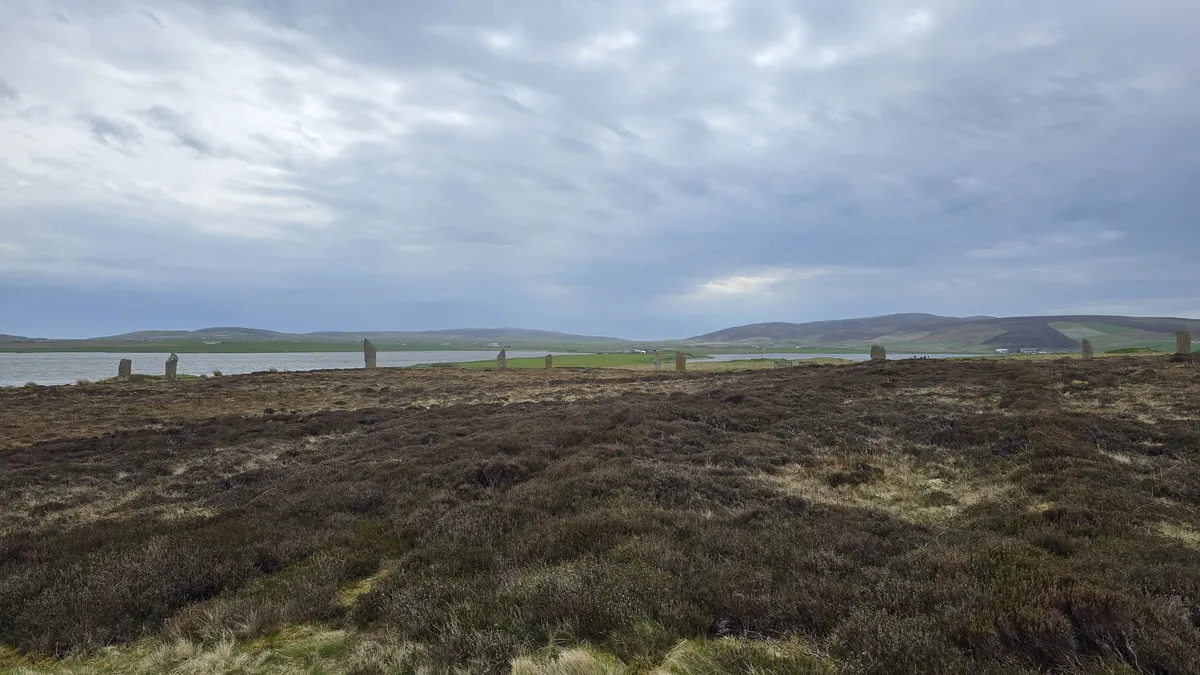
Speaking of atmosphere under a brooding sky, the final stop before my Maeshowe visit was the the Ring of Brodgar. Now my ability to describe this site sort of runs out. It is, apparently, the fifth largest stone circle in the UK. Waun Mawn in Pembroke relegated it from fourth to fifth but that site barely counts, as never finished. Avebury is naturally the largest, but that contains a village, a pub and considerable buildings from the National Trust so somehow doesn’t seem quite so imposing.
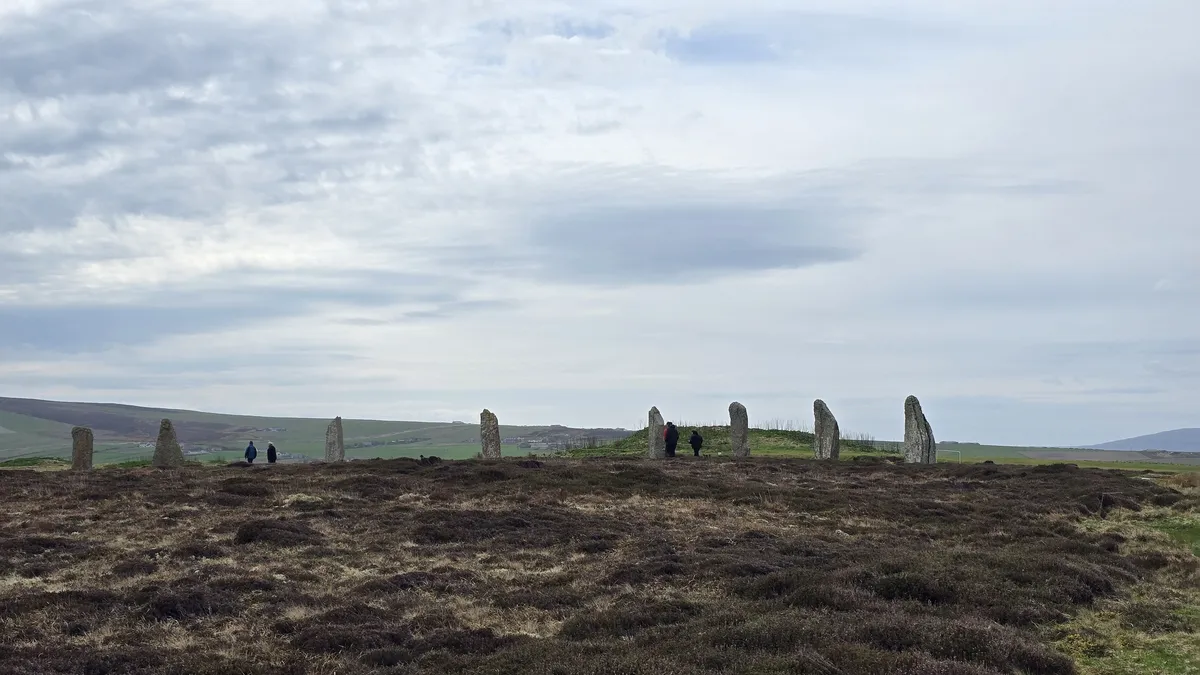 The massive Ring of Brodgar
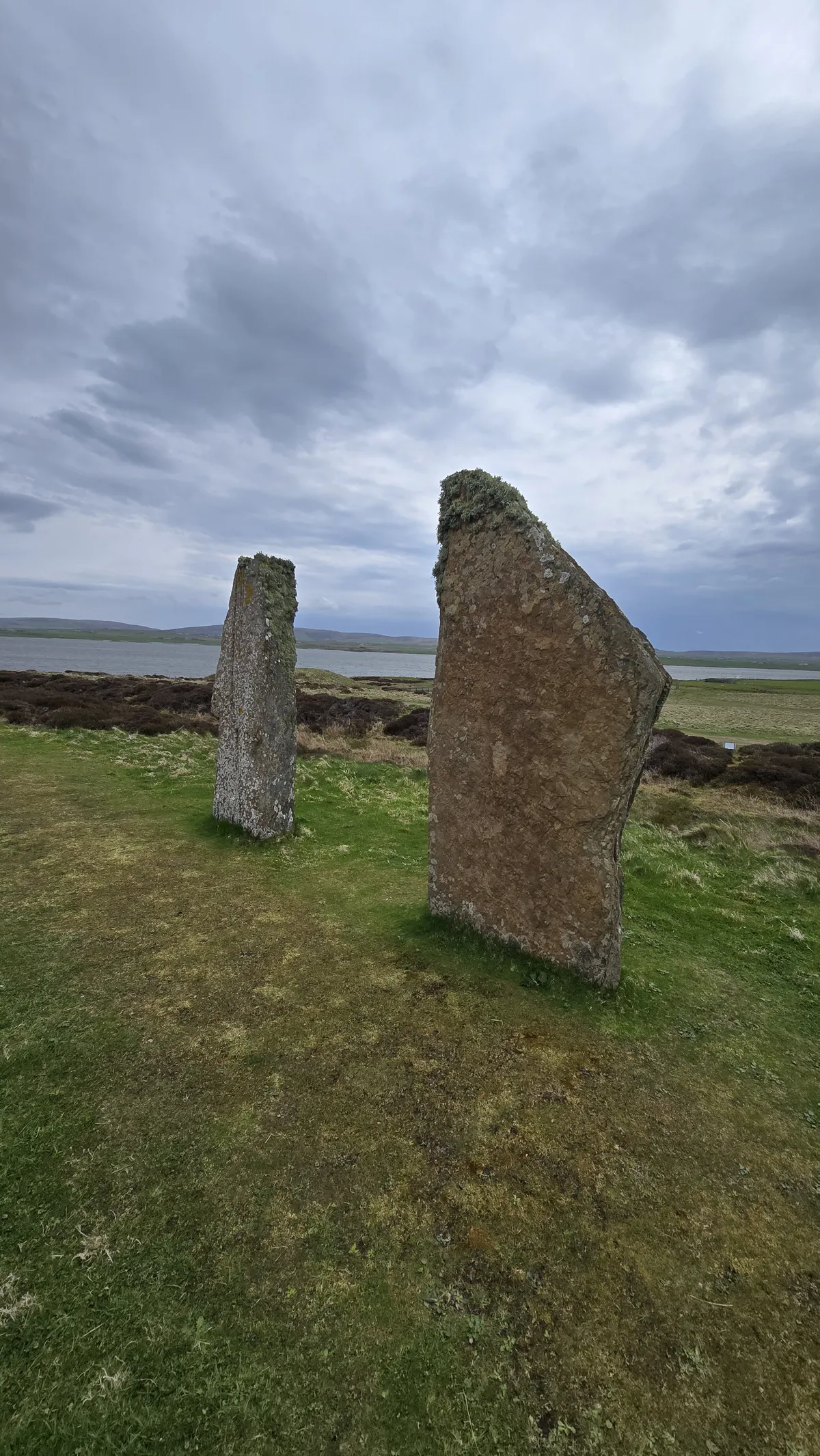
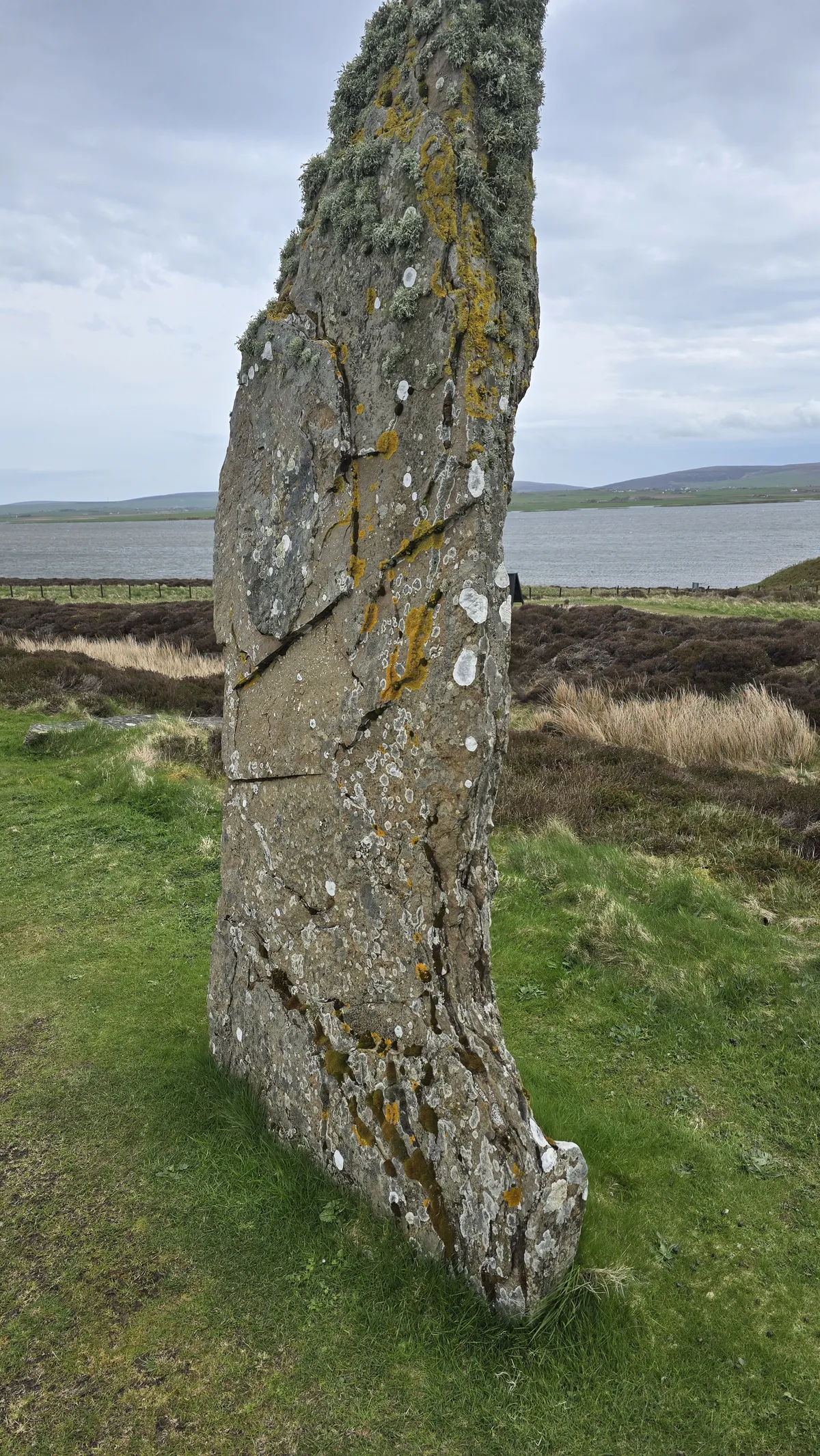
Brodgar sits higher up a short way away, in an imposing position and sourounded by a circular ditch up to 3m deep and 9m across thats cut into the bedrock and consisting (now) of 27 stones but once up to 60 this is a serious undertaking. That again is were I have to wonder, its not an original thought but the sheer effort this must have taken in this harsh landscape is serious. Moving and erecting the stones as well as the ditch - for what purpose? To align with astronomical events? To stand and communicate out to remote tribes? To worship something? Who knows but I love this site, its harsh, a huge ring of stone backed by heather and bracken and overlooking a sea loch, the wind is fierce here every time I've visited and it doesn’t give up its mysteries easily.
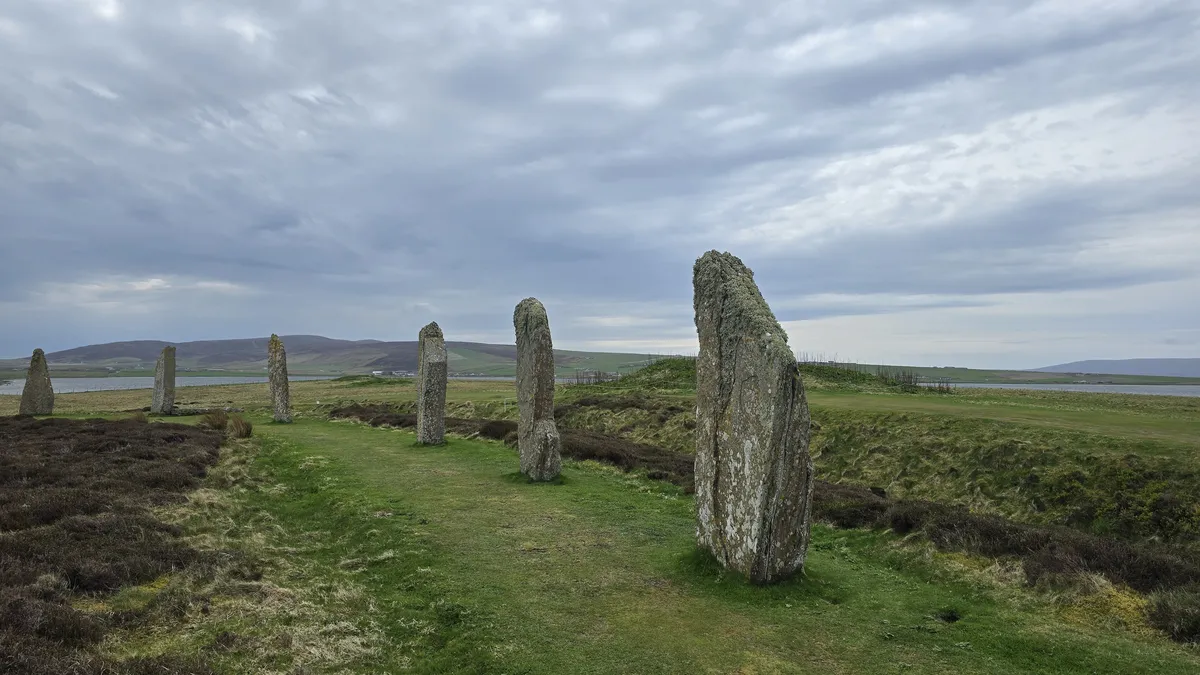 The stones making up part of the Ring of Brodgar
Right behind the circle is the Salt Knowe, a large mound that apparently has no purpose and isn’t a chambered cairn. It is, however, home to a large amount of rabbits digging it up. Despite, or perhaps because of that, you're not allowed to climb up it for what would likely be quite a nice view over the circle.
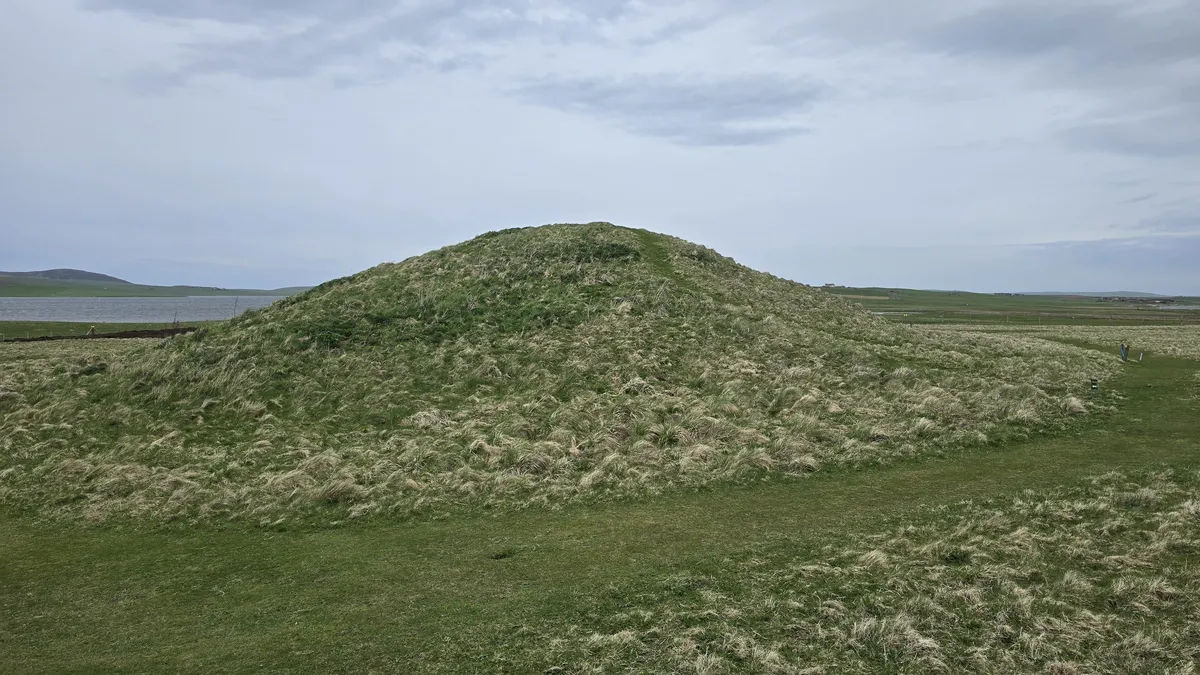 Salt Knowe, one of the mysterious lumps nearby
Anyway, this amazing landscape and this series of 3 blogs is now done. I may do a short blog on the WWII gun battery or maybe just resume regular service from my home county for future posts.